
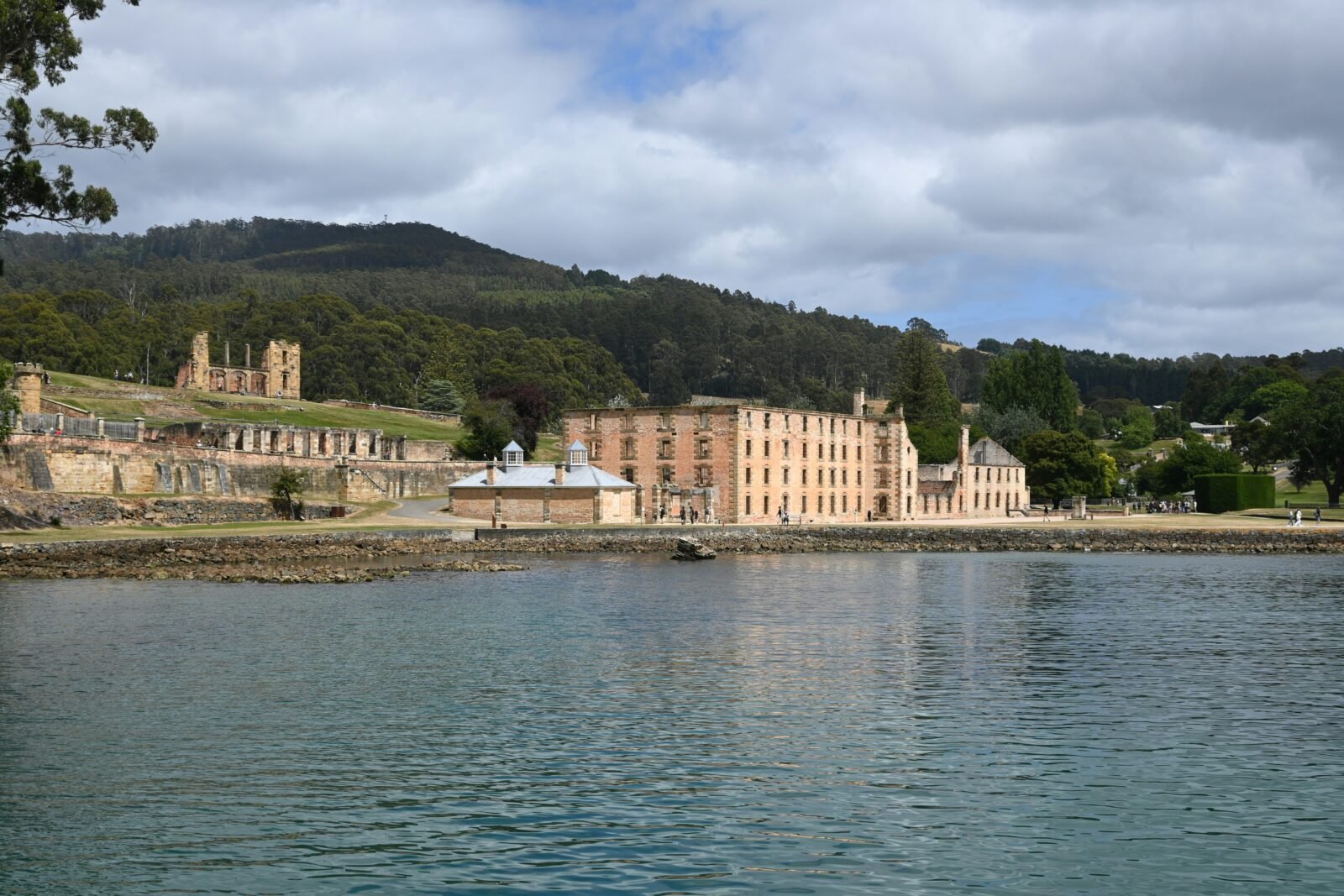
Port Arthur Tasmania is one of Australia’s most significant heritage sites and the single most visited historic attraction in Tasmania. Set on the rugged Tasman Peninsula around 90 minutes from Hobart, Port Arthur was once one of the British Empire’s most notorious convict settlements — a place designed to punish, reform, and, in some cases, break the men sent there. Today, it stands as a UNESCO World Heritage-listed site, preserved as one of the most complete convict-era landscapes anywhere in the world.
This guide covers everything you need to know before visiting Port Arthur, from its convict history and must-see ruins to practical travel tips, nearby attractions, and how to make the most of a day (or two) on the Tasman Peninsula.
Quick Facts About Port Arthur Tasmania
- Location: Tasman Peninsula, around 90 minutes’ drive southeast of Hobart
- Best known for: Convict history, UNESCO World Heritage listing, historic ruins, harbour cruises
- Operating period as a penal settlement: 1830–1877
- Ideal trip length: A full day for the historic site, 2 days to include the wider Tasman Peninsula
- Best time to visit: Year-round, though spring and autumn offer the most comfortable walking conditions
- World Heritage status: Inscribed in 2010 as part of the Australian Convict Sites listing
Why Visit Port Arthur
Port Arthur offers something few historic sites in the world can: an almost fully intact convict-era landscape, spread across 40 hectares of grounds overlooking a sheltered harbour. Rather than a single museum or building, Port Arthur is an entire township of ruins, restored buildings, gardens, and burial grounds that together tell the story of Britain’s convict transportation system and colonial Tasmania.
It’s a site that rewards time. Many visitors expect an hour or two among old buildings, but Port Arthur’s scale — combined with included harbour cruises, guided tours, and surrounding walking trails — means a full day is easily filled, and history enthusiasts often return for a second visit to explore areas they missed.
The History of Port Arthur Tasmania
Founding the Settlement
Port Arthur was established in 1830 as a timber station, using convict labour to harvest the Tasman Peninsula’s dense forests. Its location was strategic: the peninsula is connected to the rest of Tasmania by a narrow strip of land called Eaglehawk Neck, making escape extremely difficult. Guard dogs were famously chained across this narrow neck, and stories persist of the sea itself being patrolled for sharks — whether fact or exaggerated deterrent, the isolation of the site was very real.
By 1833, Port Arthur had been transformed into a punishment station for repeat offenders — convicts who had committed further crimes after arriving in the Australian colonies. It quickly grew into a highly organised, self-sufficient settlement, with its own shipyard, brickworks, gardens, hospital, and church.
Life as a Convict at Port Arthur
Daily life at Port Arthur was built around strict discipline, hard labour, and, in later years, an experimental approach to punishment based on psychological reform rather than physical brutality alone. The settlement operated on a system of classification, where convicts could be moved between harsher and more lenient conditions depending on behaviour.
The Separate Prison, built in the 1850s, reflected a shift in penal philosophy imported from Britain — isolating prisoners in individual cells for long periods, enforcing silence, and using religious instruction as a tool for reform. This approach, intended to encourage reflection, is now understood to have caused severe psychological harm to many of those subjected to it, and the site includes an Asylum building constructed to house convicts affected by the conditions.
Point Puer Boys’ Prison
Just across the harbour from the main settlement, Point Puer operated from 1834 to 1849 as one of the British Empire’s first purpose-built prisons for juvenile male convicts, some as young as nine years old. Boys were housed separately from adult convicts and were taught trades, including shoemaking, tailoring, and carpentry, in an attempt to prepare them for eventual release into colonial society.
The Isle of the Dead
A small island within Port Arthur’s harbour, the Isle of the Dead served as the settlement’s burial ground from 1833 to 1877. An estimated 1,100 to 1,700 people are buried here, including convicts, free settlers, military personnel, and children. Convict graves were largely unmarked, while free persons and officials were given headstones — a stark and visible reflection of the social hierarchy that extended even into death.
Decline and Closure
Port Arthur’s role as a penal settlement declined through the 1870s as the transportation of convicts to Tasmania ended and attitudes toward punishment shifted. The site officially closed as a prison in 1877. In the following decades, the area was renamed Carnarvon in an attempt to distance the region from its convict past, though the original name was later restored.
Bushfires in 1895 and 1897 destroyed several of the settlement’s original buildings, including the church and the penitentiary’s upper floors, leaving much of the site in the ruined state visitors see today. Rather than being lost, this partial ruin has become part of Port Arthur’s character — a landscape that visibly carries both its history and the passage of time.
World Heritage Listing
In 2010, Port Arthur was inscribed as a UNESCO World Heritage Site as part of the Australian Convict Sites listing, which recognises eleven convict-era sites across Australia for their global significance in the history of colonisation and the British penal system. Port Arthur remains the most visited and best preserved of these sites.
Best Things to See at Port Arthur Historic Site
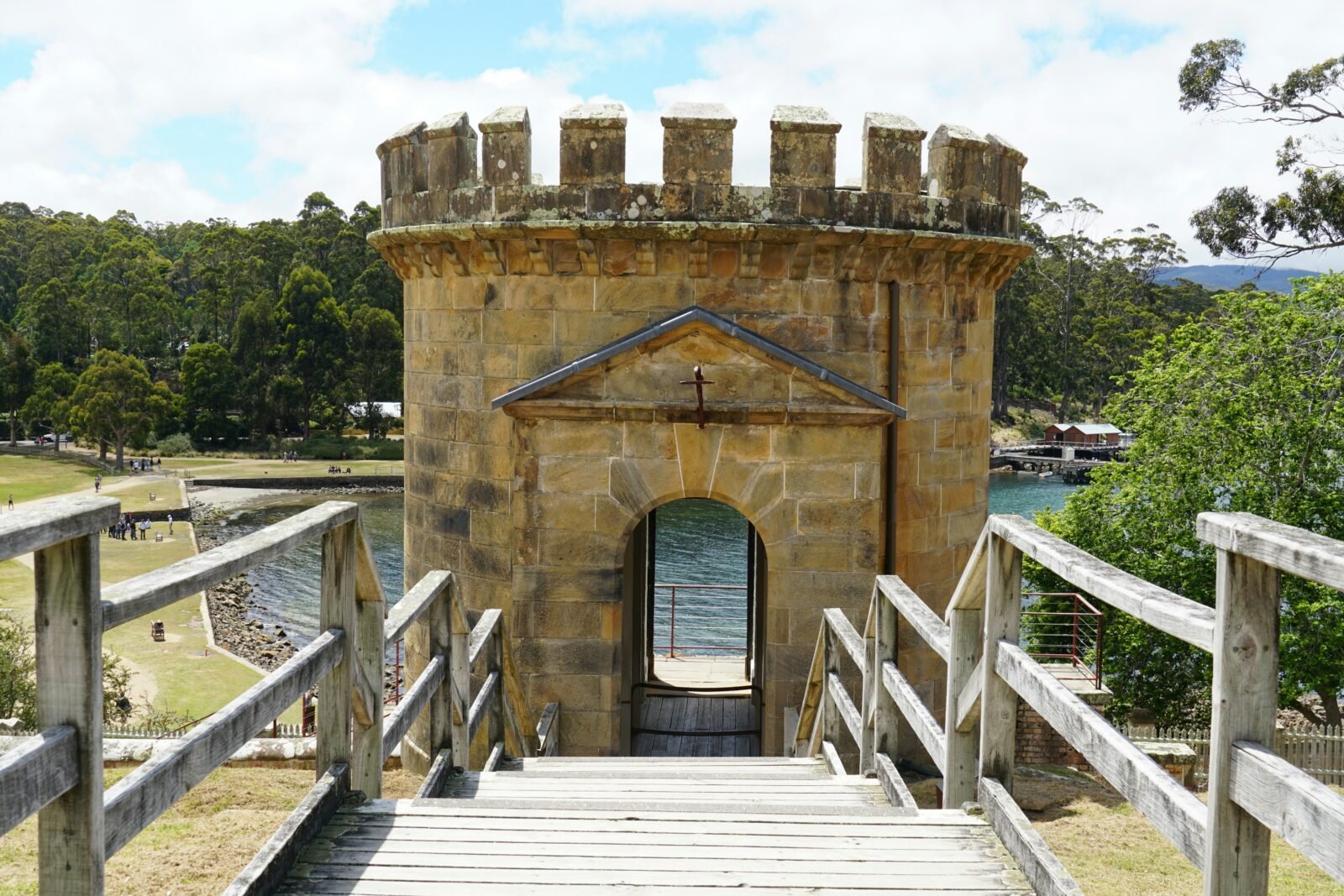
1. The Penitentiary
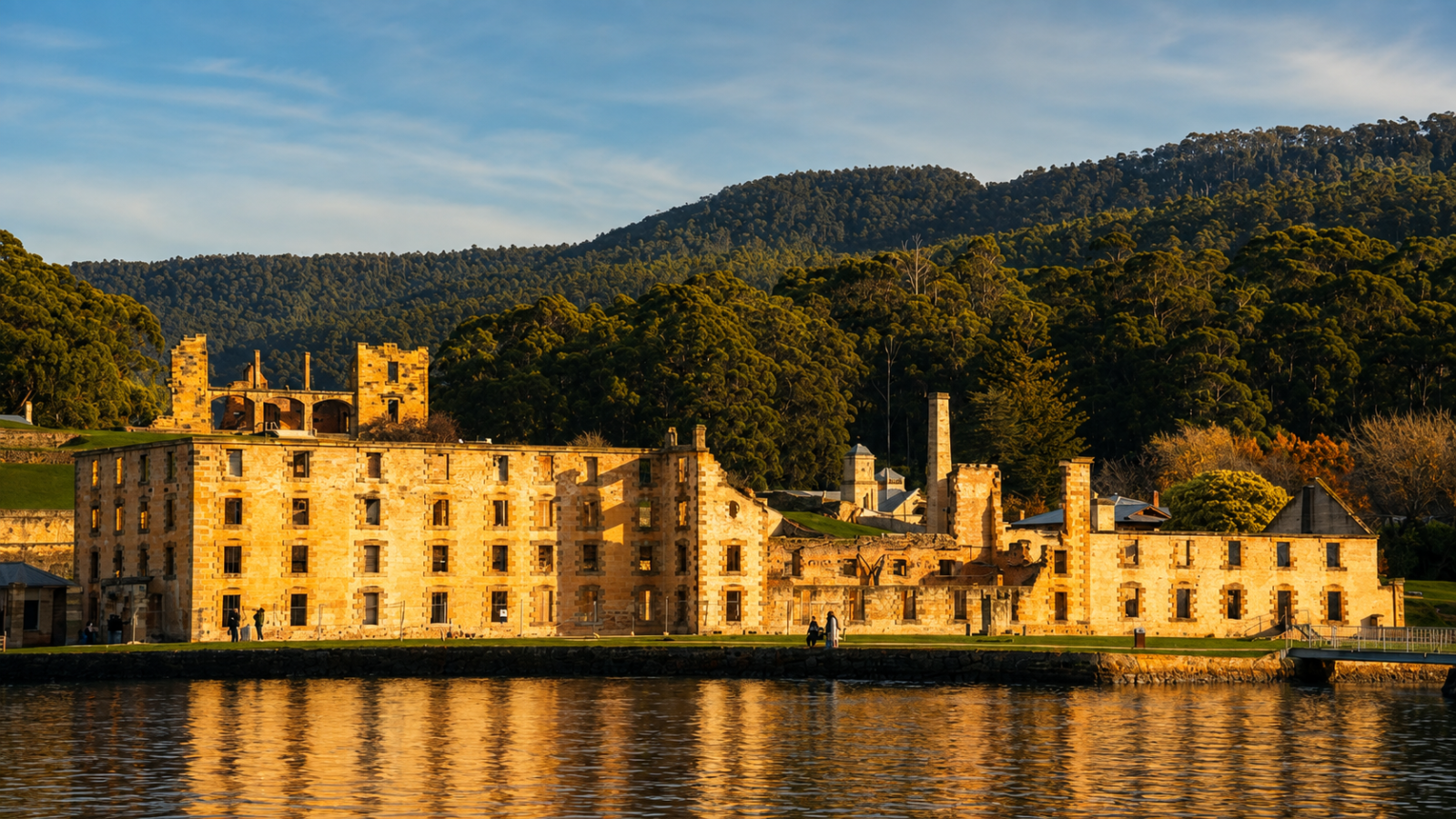
The most photographed and recognisable ruin at Port Arthur, the Penitentiary was originally built as a flour mill and granary before being converted into a multi-storey housing block for convicts. Its weathered brick walls, standing without a roof, have become the defining image of the site.
2. The Separate Prison
A confronting but essential part of understanding Port Arthur’s history, the Separate Prison used isolation and enforced silence as tools of psychological punishment. Walking through its narrow corridors and individual cells offers insight into one of the more disturbing chapters of the settlement’s approach to reform.
3. The Church
Built by convict labour in the 1830s, the Port Arthur Church was never consecrated, allowing it to be used by multiple Christian denominations. Damaged by the 1884 bushfire, its roofless stone shell remains one of the site’s most atmospheric ruins, particularly at sunset.
4. Commandant’s House
Overlooking the settlement from a slightly elevated position, the Commandant’s House reflects the relative comfort afforded to those in charge, in stark contrast to the convict accommodation elsewhere on site.
5. The Asylum
Built to house convicts suffering from mental illness — many a direct result of conditions in the Separate Prison — the Asylum building today houses the site’s museum, displaying artefacts and personal stories from the settlement’s history.
6. Isle of the Dead Cruise
A short boat trip across the harbour to Port Arthur’s burial ground, included with standard entry as a harbour cruise or available as a dedicated guided walking tour of the island itself. The guided tour offers a closer look at individual graves and the social distinctions reflected in the burial ground’s layout.
7. Point Puer Boys’ Prison Tour
A separate guided tour crosses the harbour to the site of the former boys’ prison, where little physical structure remains but the story of the young convicts held here is told in detail by site guides.
8. The Gardens
Port Arthur’s grounds include restored colonial-era gardens, originally used to grow produce for the settlement and later developed as an ornamental space. They offer a quieter, greener contrast to the more sobering ruins nearby.
9. Broad Arrow Café Memorial Garden
A peaceful memorial garden located on-site, created as a space for quiet reflection. It is treated with particular respect by visitors and staff alike.
10. Junior Medical Officer’s House & Hospital Ruins
Lesser-visited but historically significant, these buildings illustrate the medical care (and its limitations) provided to convicts and free settlers within the settlement.
11. Ghost Tours
Held in the evenings, Port Arthur’s lantern-lit ghost tours lead small groups through the site after dark, focusing on historical accounts and reported paranormal experiences tied to specific buildings. These tours run separately from general daytime admission and are popular with visitors wanting a different perspective on the site’s history.
Beyond the Historic Site: The Tasman Peninsula
Port Arthur sits within the wider Tasman Peninsula, a region known for dramatic coastal scenery, sea cliffs, and geological formations formed from the area’s distinctive dolerite rock. Many visitors combine their Port Arthur visit with a day exploring the peninsula’s natural attractions.
Tasman Arch
A dramatic natural rock arch formed by wave erosion, with a short, easy walk from the car park to a viewing platform above the churning water below.
Devils Kitchen
A narrow, steep-sided chasm carved into the coastline, located a short walk from Tasman Arch along the same clifftop track.
Tessellated Pavement
One of the best examples in the world of this rare rock formation, where natural erosion has created a pattern resembling deliberately laid tiles across a flat rock shelf near Eaglehawk Neck.
Remarkable Cave
A sea cave accessible via a short walk and staircase, framing a distinctive view of the Southern Ocean through its narrow rock opening.
Cape Raoul & Cape Hauy
Two of Tasmania’s most spectacular coastal walks, both accessed from within Tasman National Park. Cape Hauy is particularly popular for its views of the Totem Pole and Candlestick sea stacks, while Cape Raoul offers dramatic dolerite cliff scenery. Both are full-day return hikes for reasonably fit walkers.
Coal Mines Historic Site
A lesser-visited but fascinating extension of Tasmania’s convict history, this site on the peninsula’s west coast operated as a coal mining probation station in the 1830s and 1840s, using convict labour in particularly harsh conditions. Free to visit and far less crowded than Port Arthur itself, it’s a worthwhile stop for those interested in a fuller picture of the convict system.
Eaglehawk Neck
The narrow isthmus connecting the Tasman Peninsula to the rest of Tasmania, historically used as a natural barrier to prevent convict escapes. Today it’s home to beaches, a small township, and access points to several of the peninsula’s walking trails.
Wildlife Cruises
Several operators run boat tours along the Tasman Peninsula’s coastline, taking in sea cliffs, caves, and wildlife including seals, dolphins, and seabirds, with some tours extending to Cape Raoul and Tasman Island.
Practical Visitor Information
Getting to Port Arthur
Port Arthur is approximately 90 minutes’ drive from Hobart via the Arthur Highway (A9), making it an easily achievable day trip. Regular tour buses also operate from Hobart for those without a car, typically combining Port Arthur with stops at other Tasman Peninsula attractions. There is no public bus service running directly and frequently between Hobart and Port Arthur, so self-driving or a booked tour are the most practical options.
Opening Hours
Port Arthur Historic Site is open daily, with standard admission typically valid for two consecutive days, allowing visitors to split their visit if they wish to return. Ghost tours run separately in the evenings and require a separate booking.
What’s Included with Admission
Standard entry typically includes access to the grounds and buildings, a guided introductory walking tour, and a harbour cruise past the Isle of the Dead. Additional guided tours, such as the dedicated Isle of the Dead walking tour and the Point Puer boys’ prison tour, are usually available for an extra cost.
How Long to Spend at Port Arthur
A minimum of three to four hours is recommended to see the main buildings and take the included harbour cruise. A full day allows time for additional guided tours, the museum, and a more unhurried pace through the extensive grounds. Given the two-day ticket validity, some visitors choose to split their visit across two shorter sessions.
Accessibility
Port Arthur has made significant efforts to improve accessibility across the site, with accessible pathways, ramps, and accessible restrooms in key areas, though some of the original ruined buildings have uneven or restricted access due to their historic condition.
Facilities
The site includes a visitor centre, café, gift shop, and picnic areas. Given its size, comfortable walking shoes are recommended, and visitors should be prepared for uneven ground in parts of the historic precinct.
Travel Tips for Visiting Port Arthur
Best Time to Visit
Port Arthur is open year-round, and each season offers a different atmosphere. Spring and autumn provide the most comfortable walking conditions, with mild temperatures and fewer crowds than peak summer. Summer (December–February) is the busiest period, with long daylight hours ideal for combining the historic site with a full day exploring the wider peninsula. Winter is quieter and can add a particularly atmospheric quality to the ruins, though shorter days limit how much can be fit in.
What to Wear
As with most of Tasmania, weather on the Tasman Peninsula can change quickly. Layers, a waterproof jacket, and sturdy, comfortable walking shoes are recommended, particularly given the site’s extensive grounds and uneven historic pathways.
Booking Ahead
While standard daytime entry doesn’t always require advance booking, ghost tours and specialty guided tours such as the Point Puer tour can sell out, particularly during peak season, so booking ahead is recommended if these are a priority.
Respecting the Site
Port Arthur is a place of genuine historical significance and, for some visitors and staff, personal connection. It’s worth approaching the site with the same quiet respect you’d bring to any place of memorial or mourning, particularly around the Isle of the Dead and memorial garden areas.
Combining with Other Attractions
Given its distance from Hobart, most visitors combine Port Arthur with at least one or two of the Tasman Peninsula’s natural attractions, such as Tasman Arch, Devils Kitchen, or the Tessellated Pavement, all of which are short, easy stops along the drive back toward Hobart.
Where to Eat & Stay Near Port Arthur
The Port Arthur and Tasman Peninsula area has a growing number of accommodation options, from caravan parks and self-contained cabins to boutique guesthouses, many with water views over the surrounding coastline. On-site, the historic site’s café offers meals and refreshments, while the nearby township has a small selection of cafés, pubs, and providores catering to day-trippers and overnight visitors alike.
For those staying overnight, basing yourself on the Tasman Peninsula rather than returning to Hobart the same day allows time for an early or late visit to Port Arthur when the site is quieter, as well as more time to explore the peninsula’s coastal walks.
Suggested Port Arthur Itinerary (1 Day from Hobart)
- Morning: Depart Hobart early, stopping at Eaglehawk Neck for the Tessellated Pavement
- Midday: Arrive at Port Arthur Historic Site, join the included introductory tour and harbour cruise
- Afternoon: Continue exploring the grounds, museum, and Separate Prison
- Late afternoon: Stop at Tasman Arch and Devils Kitchen on the drive back to Hobart
Suggested Port Arthur & Tasman Peninsula Itinerary (2 Days)
Day 1: Port Arthur Historic Site
Spend the full day at Port Arthur, including the harbour cruise, museum, and additional guided tours such as the Isle of the Dead or Point Puer. Stay overnight on the peninsula.
Day 2: Natural Attractions & Walks
Explore the Tasman Peninsula’s coastal features — Tasman Arch, Devils Kitchen, Remarkable Cave, and Tessellated Pavement — before tackling one of the longer coastal walks, such as Cape Hauy, if time and fitness allow.
Frequently Asked Questions About Port Arthur
How far is Port Arthur from Hobart?
Port Arthur is approximately 90 minutes’ drive from Hobart via the Arthur Highway, making it a popular full-day trip.
How long should you spend at Port Arthur?
A minimum of three to four hours covers the main site and harbour cruise, though a full day allows for additional guided tours and a more relaxed pace.
Is Port Arthur a UNESCO World Heritage Site?
Yes, Port Arthur was inscribed in 2010 as part of the Australian Convict Sites World Heritage listing, recognising eleven convict-era sites across Australia.
What was Port Arthur used for?
Port Arthur operated as a penal settlement from 1830 to 1877, initially as a timber station before becoming a punishment station for repeat convict offenders, including a purpose-built prison for juvenile convicts at nearby Point Puer.
Can you visit Port Arthur in one day?
Yes, Port Arthur is easily visited as a day trip from Hobart, and standard tickets are typically valid across two consecutive days if you wish to split your visit.
Is Port Arthur suitable for children?
Yes, though the site’s history includes some confronting subject matter. Families with younger children may prefer to focus on the outdoor grounds, harbour cruise, and gardens rather than the more intensive exhibits within the Separate Prison and Asylum.
Final Thoughts
Port Arthur offers a rare opportunity to walk through one of the most complete convict-era landscapes left in the world. Its ruined buildings, restored grounds, and surrounding coastal scenery combine history and natural beauty in a way few other sites in Australia can match. Whether you spend a rushed afternoon or a full two days exploring the wider Tasman Peninsula, Port Arthur remains one of the essential stops on any Tasmanian itinerary.
- Flights: compare flights for your Tasmania trip.
- Accommodation: compare accommodation options for Hobart and your wider South Tasmania itinerary.
- Car hire: compare rental car options for your Tasmania road trip.
- Camping and campervan planning: browse Camps Australia Wide travel guides.
- International mobile data: explore Airalo eSIM options and check device compatibility before purchasing.
Affiliate disclosure: Some links on this page are affiliate links. Island Files Tasmania may receive a commission from eligible bookings or purchases made through these links at no additional cost to you. Affiliate relationships do not affect our aim of providing useful, independent travel-planning information.
Travel information note: Information in this South Tasmania travel guide is intended for general trip planning. Ferry arrangements, prices, opening hours, road access, national park requirements, walking-track conditions, tours and other visitor information can change. Always confirm important details with the relevant official authority, accommodation provider or operator before travelling.