
Hobart Tasmania brings together waterfront scenery, historic streets, mountain landscapes, markets, museums, food and easy access to some of southern Tasmania’s most memorable destinations.
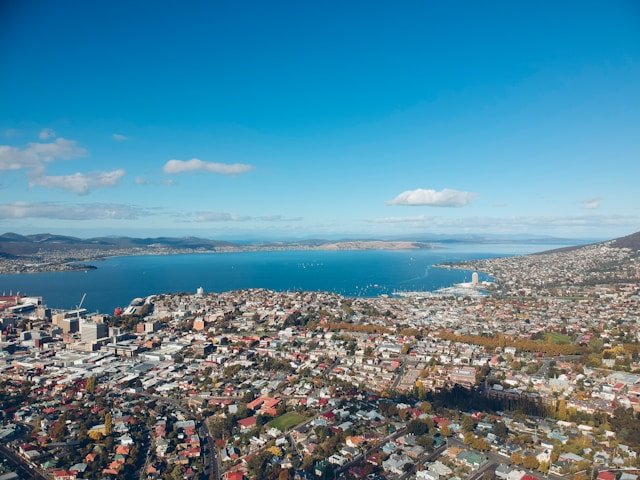
Set beside the River Derwent with kunanyi / Mount Wellington rising behind the city, Hobart has a setting that makes nature feel unusually close to the centre. You can spend the morning exploring Salamanca and Battery Point, walk beside the waterfront in the afternoon, and find yourself high above the city on the mountain later the same day.
But Hobart deserves more than being treated simply as the arrival point for a Tasmania road trip.
The city rewards travellers who slow down. Historic sandstone warehouses sit beside a working harbour. Small streets climb from Salamanca into Battery Point. Markets and restaurants showcase Tasmanian produce, while museums and galleries provide another perspective on the island’s history, culture and creativity.
Hobart is also one of the most practical bases for exploring South Tasmania. Bruny Island, Richmond, the Coal River Valley, the Tasman Peninsula, Port Arthur, the Huon Valley and Mount Field can all be incorporated into a longer southern itinerary.
This Hobart Tasmania travel guide covers the city’s major attractions, neighbourhoods, food experiences, walks, accommodation areas, transport, seasons and day trips, along with suggested Hobart itineraries for different trip lengths.
If Hobart is only one stop on a larger island journey, begin with our Travel Tasmania: Complete Guide to Every Region. For help deciding how many days to spend around the island, read our complete Tasmania trip planning guide.
Hobart Tasmania Quick Guide
- Location: South-east Tasmania
- Best for: History, food, markets, museums, waterfront scenery, mountain views and southern Tasmania day trips
- Main city areas for visitors: Hobart CBD, waterfront, Salamanca, Battery Point and nearby inner suburbs
- Major natural landmark: kunanyi / Mount Wellington
- Major weekly attraction: Salamanca Market
- Major cultural attraction: MONA
- Recommended first visit: Around 3–5 days for Hobart and selected nearby experiences
- Airport: Hobart Airport
- Good day-trip directions: Richmond, Bruny Island, Tasman Peninsula, Port Arthur, Huon Valley and Mount Field
Jump to Hobart
- About Hobart Tasmania
- Why Visit Hobart?
- Best Things to Do in Hobart
- Hobart Waterfront
- Salamanca Place
- Salamanca Market
- Battery Point
- kunanyi / Mount Wellington
- MONA
- Royal Tasmanian Botanical Gardens
- Museums & Culture
- Food & Drink
- Walks & Nature
- Free Things to Do
- Hobart with Families
- Where to Stay
- Best Time to Visit
- Getting to Hobart
- Getting Around Hobart
- Best Day Trips from Hobart
- Hobart Itineraries
- Practical Travel Tips
- Frequently Asked Questions
- Plan Your Hobart Trip
- Hobart Without a Car
- Hobart for Couples
- Hobart on a Budget
- Accessibility
- Weather & What to Pack
- Driving & Parking
- Campervan Travel
- International Visitors
- Where to Go After Hobart
- Book Your Hobart Trip
About Hobart Tasmania
Hobart is Tasmania’s capital and the principal city of southern Tasmania. It sits on the River Derwent in the island’s south-east, beneath the distinctive mass of kunanyi / Mount Wellington.
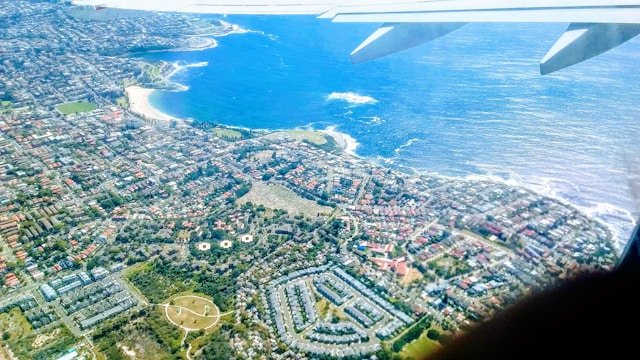
Its physical setting is central to the Hobart experience. Water lies beside the city centre, hills rise through surrounding neighbourhoods, and the mountain provides a dramatic backdrop that can change appearance several times within a single day.
Greater Hobart had an estimated population of about 255,000 in June 2025, making it far smaller than mainland capitals such as Melbourne, Sydney or Brisbane. That scale contributes to one of Hobart’s practical advantages for visitors: significant urban attractions sit relatively close to natural landscapes.
Hobart is also a useful geographical starting point. Travel south and south-west and the city gives way to the Channel and Huon Valley. Head east and you can connect with Richmond, the Coal River Valley and eventually the Tasman Peninsula. Follow the Derwent inland and the landscape leads towards the Derwent Valley, Mount Field and Tasmania’s Central Highlands.
That makes Hobart both a destination in its own right and a gateway to a much larger southern Tasmania journey.
What Is Hobart Known For?
Hobart is particularly known for its waterfront setting, Salamanca Place, Salamanca Market, Battery Point, kunanyi / Mount Wellington, MONA, historic architecture, food and access to southern Tasmania.
Some of the best-known Hobart attractions and experiences include:
- Salamanca Place
- Salamanca Market
- Hobart waterfront
- Constitution Dock
- Battery Point
- kunanyi / Mount Wellington
- MONA
- Royal Tasmanian Botanical Gardens
- Tasmanian Museum and Art Gallery
- Historic streets and architecture
- Restaurants, cafés and Tasmanian produce
- River Derwent scenery
- Walking and cycling
- Easy access to wider South Tasmania
Why Visit Hobart Tasmania?
Hobart works particularly well for travellers who want several different types of experience without changing accommodation every night.
1. The City Has an Exceptional Natural Setting
Few Australian capitals have such an immediate relationship with a mountain landscape. kunanyi / Mount Wellington rises behind Hobart while the River Derwent shapes the city’s eastern edge.
The result is a city where viewpoints, bushwalking and waterfront scenery can be combined easily with restaurants, museums and historic neighbourhoods.
2. Much of Central Hobart Is Easy to Explore on Foot
The waterfront, Salamanca Place and Battery Point sit close enough together to form a natural walking route.
This is particularly useful for visitors staying centrally because a car is not necessary for every day of a Hobart trip.
3. History Remains Visible in the Streetscape
Sandstone warehouses, older cottages, maritime buildings and historic streets give parts of Hobart a distinctive architectural character.
Rather than being confined to a single heritage attraction, traces of the city’s past appear throughout Salamanca, Battery Point and the waterfront.
4. Hobart Has a Strong Food Identity
Tasmanian seafood, seasonal produce, cheese, fruit, baked goods, wine, cider and other locally produced ingredients appear throughout Hobart’s markets, restaurants and cafés.
The city’s size also makes it relatively easy to combine sightseeing with food rather than dedicating an entire separate day to dining.
5. It Is an Excellent Base for South Tasmania
Some of Tasmania’s major visitor destinations can be reached from Hobart as day trips or short overnight extensions.
These include Bruny Island, Richmond, Port Arthur, the Tasman Peninsula, Huon Valley and Mount Field National Park.
For the broader regional picture, see our South Tasmania Travel Guide.
Best Things to Do in Hobart Tasmania
The best things to do in Hobart depend on whether you are most interested in scenery, history, food, art or outdoor experiences. First-time visitors should generally combine several rather than building the trip around only one attraction.
A strong Hobart itinerary usually includes the waterfront and Salamanca, time in Battery Point, kunanyi / Mount Wellington when weather permits, at least one museum or cultural experience and enough unstructured time to explore the city on foot.
1. Explore the Hobart Waterfront
The waterfront is one of the best places to begin exploring Hobart because it brings together the city’s maritime character, historic architecture, restaurants, public spaces and River Derwent views.
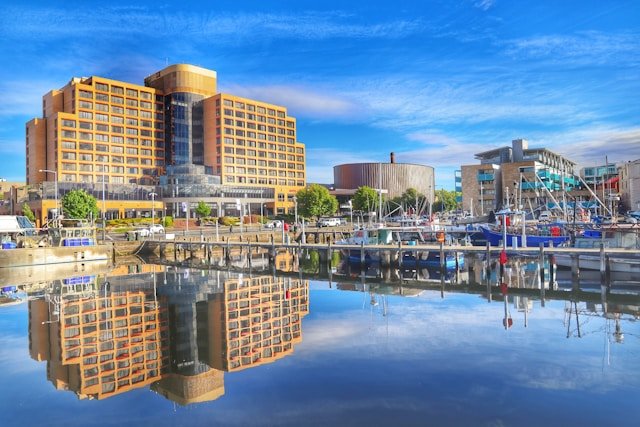
Unlike a waterfront developed purely for visitors, parts of Hobart’s harbour remain connected to working maritime activity. Fishing vessels, ferries and other boats contribute to an atmosphere that changes throughout the day.
Allow time to walk rather than treating the waterfront as a single attraction. The area connects naturally with Constitution Dock, Brooke Street Pier, Salamanca Place and the lower streets leading towards Battery Point.
Constitution Dock
Constitution Dock is one of Hobart’s recognisable harbour areas and sits conveniently between the city centre and Salamanca.
It is easy to incorporate into a waterfront walk and is particularly atmospheric when boats are moving through the harbour.
Brooke Street Pier
Brooke Street Pier functions as an important waterfront departure point and provides connections for several visitor experiences on the River Derwent.
If you are travelling by ferry to MONA or joining another water-based experience, check the relevant departure arrangements in advance rather than assuming all services leave from the same location.
Walk the Waterfront at Different Times
The character of the waterfront changes throughout the day. Early mornings can be relatively quiet, while afternoons and evenings bring more activity around restaurants and public spaces.
If you are staying centrally, return more than once rather than attempting to experience the entire area during a single walk.
2. Walk Through Salamanca Place
Salamanca Place is one of the most recognisable parts of Hobart Tasmania. Its long row of sandstone warehouses reflects the area’s historic connection with Hobart’s waterfront while the modern precinct contains restaurants, cafés, galleries, shops and other businesses.

Salamanca is worth visiting even when the famous Saturday market is not operating.
Walking beneath the sandstone façades and through the surrounding lanes provides a useful transition between the waterfront and Battery Point above.
Salamanca Lawns
The lawns opposite the warehouses provide an open public space between Salamanca Place and the waterfront environment.
They can be particularly useful for families or travellers who simply want somewhere to slow down between attractions.
Kelly’s Steps
Kelly’s Steps provide a historic pedestrian connection between Salamanca and Battery Point.
Using the steps turns two major Hobart attractions into a single walking route rather than separate driving stops.
3. Visit Salamanca Market
If your Hobart visit includes a Saturday, Salamanca Market is one of the city’s signature experiences.
The market stretches along Salamanca Place and brings together hundreds of stalls selling produce, food, handmade products, gifts and other Tasmanian goods.
As of 2026, Salamanca Market operates every Saturday from 8:30 am to 3:00 pm. Because schedules can change around exceptional circumstances, check the official market information shortly before travelling.
When Should You Visit Salamanca Market?
Visitors wanting a quieter experience may prefer arriving earlier, while those interested mainly in atmosphere may enjoy the busier middle portion of the day.
There is no need to rush through every stall. The market works better when combined with breakfast, coffee or a slow walk through the surrounding Salamanca precinct.
What Can You Find at Salamanca Market?
Stallholders vary, but the market is strongly associated with Tasmanian-made and locally produced goods. Visitors may encounter fresh produce, prepared food, crafts, artwork, clothing, gifts and products made by local makers and producers.
If Salamanca Market is essential to your trip, build your Hobart itinerary around Saturday rather than arriving and discovering that the market was scheduled for another day.
4. Explore Battery Point
Battery Point sits immediately above Salamanca and is one of Hobart’s most rewarding neighbourhoods to explore on foot.
The area is known for historic cottages, older streets, architectural details and a quieter residential atmosphere that contrasts with the activity around Salamanca below.

Battery Point is not best approached as a checklist of attractions. Much of its appeal comes from walking slowly through the neighbourhood and noticing how the streets, houses and harbour views fit together.
Arthur Circus
Arthur Circus is one of Battery Point’s best-known historic residential spaces. Its small central green and surrounding cottages make it an easy point to incorporate into a neighbourhood walk.
Remember that Battery Point remains a residential neighbourhood. Respect private property and avoid blocking doorways, driveways or streets while taking photographs.
Battery Point Walking Route
A simple first-time route is to begin around Salamanca Place, climb towards Battery Point via Kelly’s Steps, explore the surrounding historic streets and gradually return towards the waterfront.
The hills can make a short distance feel more substantial than it appears on a map, so comfortable footwear is useful.
5. Visit kunanyi / Mount Wellington
kunanyi / Mount Wellington is the defining natural landmark of Hobart and one of the most important places to visit in Hobart.
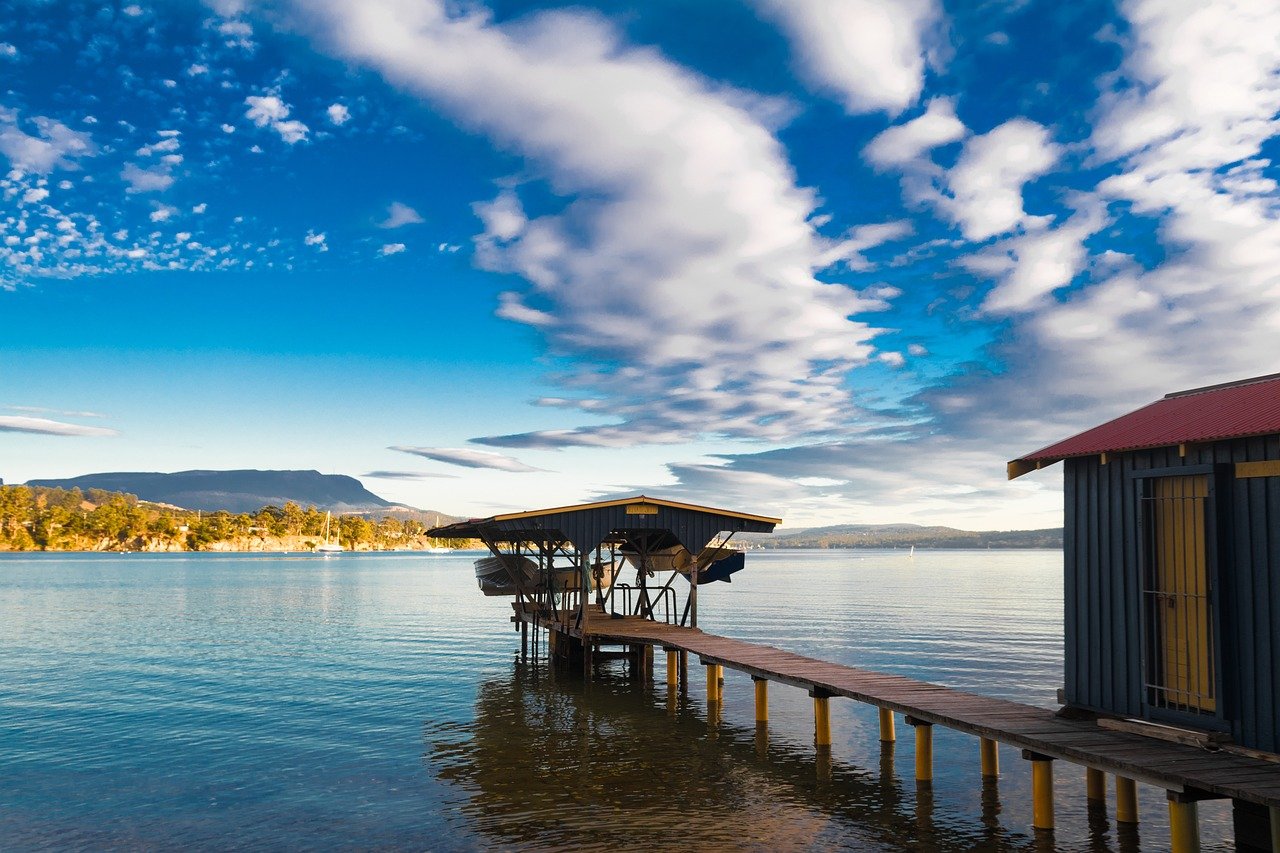
The mountain rises to approximately 1,271 metres above sea level, creating a dramatic elevation change from the River Derwent and central city below.
On a clear day, the summit area provides extensive views over Hobart, the River Derwent and surrounding landscapes. On another day, cloud can obscure almost everything.
Both conditions are part of the mountain environment.
Driving to the Summit
Pinnacle Road provides vehicle access towards the summit, making kunanyi / Mount Wellington accessible to visitors who are not undertaking a long hike.
However, road access should never be assumed.
Snow, ice, severe weather and other hazards can cause temporary closures. Check the current Pinnacle Road status before leaving Hobart, particularly during colder conditions.
Weather on kunanyi / Mount Wellington
The summit can be significantly colder, windier and more exposed than central Hobart.

Carry warm and weather-resistant clothing even when conditions around Salamanca or the waterfront feel comfortable.
Walking on the Mountain
Wellington Park contains an extensive network of walking and mountain-bike tracks through forest, woodland and alpine environments.
Choose a route according to current conditions, daylight, fitness and experience rather than simply selecting whichever trail appears most dramatic online.
When Is the Best Time to Visit the Summit?
There is no guaranteed clear period. Mountain weather can change quickly.

If your Hobart itinerary lasts several days, keep the mountain day flexible. When a clear weather window appears, consider using it rather than waiting until a predetermined final day.
6. Visit MONA
The Museum of Old and New Art—widely known as MONA—is one of Hobart’s most internationally recognised cultural attractions.
Located at Berriedale north of central Hobart, the museum is known for presenting ancient, modern and contemporary works in an unconventional setting.

MONA is not simply another stop to squeeze between several city attractions. Visitors interested in art and the overall experience should allow a substantial part of the day.
Getting to MONA by Ferry
For many visitors, travelling along the River Derwent by ferry is part of the MONA experience itself.
Ferry schedules, museum opening days and ticket arrangements can change, so check current information and coordinate your transport with your museum booking.
How Long Should You Spend at MONA?
Allow at least several hours if MONA is important to you. Visitors who engage deeply with exhibitions may spend considerably longer.
A good approach is to avoid scheduling another major attraction immediately afterward. Leave enough flexibility for the museum visit to take longer than expected.
7. Explore the Royal Tasmanian Botanical Gardens
The Royal Tasmanian Botanical Gardens provide a quieter counterpoint to Hobart’s waterfront, markets and museums.
Located close to the central city, the gardens contain a variety of plant collections and landscaped spaces and can work well for travellers wanting a slower morning or afternoon.
The gardens are particularly useful in a Hobart itinerary because they do not require an entire day. They can be combined with another nearby attraction or visited between longer regional excursions.
8. Discover Hobart’s Museums, Art and Culture
Hobart’s cultural attractions provide important context for a trip around Tasmania. Landscapes become more meaningful when visitors also understand something of the island’s natural history, maritime history, communities and creative culture.
Tasmanian Museum and Art Gallery
The Tasmanian Museum and Art Gallery, commonly shortened to TMAG, is conveniently located near Hobart’s waterfront.
Its central location makes it particularly useful when weather interrupts outdoor plans or when visitors want to add historical and cultural context without leaving the city centre.
Maritime Connections
Hobart’s relationship with the sea is visible throughout the waterfront, but visitors interested in maritime history can explore it more deliberately through the city’s museums, historic vessels, harbour areas and interpretation.
This maritime perspective becomes especially useful before travelling farther around Tasmania, where ports, fishing, shipbuilding and coastal settlement have shaped many communities.
9. Explore Historic Hobart
Hobart’s history is not confined to one heritage precinct. It appears through Salamanca’s warehouses, Battery Point’s cottages, waterfront buildings, churches, civic architecture and street patterns.
Walking between these places is often more revealing than visiting them independently by car.

Visitors interested in Tasmania’s broader colonial and convict history can later extend this experience to Richmond and the Port Arthur Historic Site.
10. Experience the River Derwent
The River Derwent is fundamental to Hobart’s geography. It shapes the waterfront, separates parts of Greater Hobart and creates the broad water views visible from numerous hills and viewpoints.
Visitors can experience the river simply by walking the waterfront, but ferries and cruises provide a different perspective on the city and surrounding landscape.
A ferry journey can be especially useful because it transforms transport into sightseeing rather than adding another separate activity to the itinerary.
Best Hobart Neighbourhoods and Areas to Explore
Central attractions receive most of the attention, but exploring several neighbourhoods helps visitors understand Hobart beyond its major landmarks.
Hobart CBD
The central business district provides convenient access to shops, restaurants, transport and several cultural attractions.
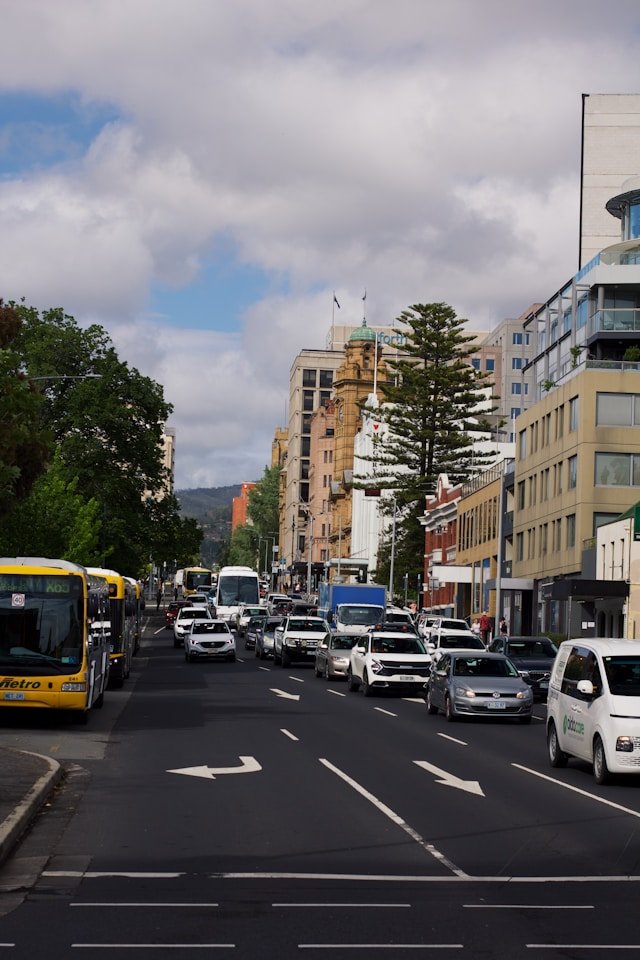
It is practical rather than uniformly picturesque, but its location makes it one of the easiest bases for travellers without a car.
Salamanca
Salamanca combines heritage architecture with restaurants, galleries, shops and immediate access to the waterfront and Battery Point.
For first-time visitors who prioritise walking, it is one of Hobart’s most convenient areas.
Battery Point
Battery Point provides a quieter historic atmosphere while remaining close to Salamanca and the waterfront.
Its hills and older streets make it particularly attractive for travellers who enjoy exploring neighbourhoods on foot.
North Hobart
North Hobart is particularly useful for dining and provides a different atmosphere from the waterfront-focused visitor precincts.
Travellers staying for several days may enjoy spending an evening here rather than returning repeatedly to Salamanca.
South Hobart
South Hobart sits closer to the foothills of kunanyi / Mount Wellington and provides access towards walking areas and Wellington Park.
It can appeal to visitors who want a more residential base with relatively easy access to both the city and mountain.
Food and Drink in Hobart Tasmania
Food can be one of the strongest parts of a Hobart visit because the city sits close to several productive agricultural, wine and seafood regions.
Menus change between venues and seasons, but Tasmanian seafood, vegetables, fruit, cheese, meat, baked goods, wine, cider and spirits are widely represented across the city’s food scene.
Where to Eat in Hobart
Rather than naming a fixed list of restaurants that can date quickly, it is more useful to understand Hobart’s main dining areas.
- Waterfront: convenient for seafood and harbour atmosphere.
- Salamanca: restaurants, cafés and bars close to major attractions.
- CBD: broad range of casual and higher-end dining.
- North Hobart: one of the city’s established restaurant areas.
- Battery Point: smaller-scale cafés and dining in a historic neighbourhood.
Tasmanian Seafood
Hobart’s waterfront setting makes seafood an obvious part of the city’s food identity.
Availability and species vary, so visitors interested in local seafood should look for venues that clearly identify sourcing rather than assuming every seafood item is Tasmanian.
Tasmanian Wine and Drinks
Hobart provides opportunities to sample Tasmanian wine, cider, spirits and other beverages without travelling directly to producers.
Travellers wanting a dedicated vineyard experience can extend the journey into the Coal River Valley as part of a Richmond day trip.
Walks and Nature Around Hobart
One of Hobart’s advantages is that walking can form part of ordinary sightseeing rather than requiring a dedicated hiking day.
Waterfront to Battery Point
This is one of the simplest urban walks for a first-time visitor. Begin around the waterfront, continue through Salamanca and climb into Battery Point.
The route combines harbour scenery, heritage architecture and neighbourhood exploration without requiring transport between each attraction.
Wellington Park
Wellington Park provides a much broader network of walking opportunities through forest, gullies, waterfalls and exposed higher terrain.
Track difficulty varies considerably. Check the route, distance, conditions and expected daylight before beginning longer walks.
Queens Domain
The Queens Domain provides open space and walking opportunities close to central Hobart and the Royal Tasmanian Botanical Gardens.
It can be incorporated into a quieter day when you want outdoor time without committing to a mountain excursion.
Free Things to Do in Hobart
Some of the most enjoyable things to do in Hobart require little or no admission cost, making it relatively easy to balance paid attractions with free experiences.
- Walk around Hobart’s waterfront.
- Explore Salamanca Place.
- Walk through Battery Point.
- Visit Salamanca Market and browse the stalls.
- Explore suitable public areas of the Royal Tasmanian Botanical Gardens.
- Walk around the Queens Domain.
- Enjoy River Derwent viewpoints.
- Explore central Hobart’s historic streets.
- Use suitable walking tracks around the city’s reserves and foothills.
- Watch changing weather over kunanyi / Mount Wellington from the city.
Transport, parking, food or optional activities can still create costs even when the attraction itself has no admission charge.
Hobart Tasmania with Families
Hobart can work well for family travel because major experiences range from parks and gardens to museums, markets, ferries and short walks.
The city’s relatively compact central area also means families do not necessarily need to spend every day moving children between attractions by car.
Waterfront with Children
Boats, open spaces and changing harbour activity can make the waterfront interesting even without a formal attraction.

As with any waterfront environment, supervise young children closely around water, roads and working harbour areas.
Salamanca Market with Children
The market provides food, colour and variety, but it can become busy. Families with very young children may find an earlier visit easier than navigating the busiest period.
kunanyi / Mount Wellington with Children
The ability to reach the summit area by road when conditions permit makes the mountain accessible to many families without requiring a long hike.
However, the summit remains an exposed mountain environment. Warm clothing and close supervision are important, particularly in strong wind, cold or icy conditions.
Getting to Hobart Tasmania
Most interstate and international visitors reach Hobart by flying into Hobart Airport or by travelling south overland after arriving elsewhere in Tasmania.
Flying to Hobart
Hobart Airport is approximately 17 kilometres from central Hobart. Road travel time varies with traffic and the exact destination.
Once your Tasmania dates are established, you can compare flights to Hobart and Tasmania. Check baggage allowances, fare conditions and airline schedules directly before booking.
Hobart Airport to the City
Current ground-transport options include airport bus services, taxis, rideshare and rental vehicles.
Hobart Airport currently lists the Hobart Express SkyBus as operating between the airport and central Hobart seven days a week, with an average journey of around 30 minutes. Check the current timetable and fare before relying on a particular service.
Driving to Hobart from Northern Tasmania
Travellers arriving in northern Tasmania can reach Hobart by road. The most direct route from Launceston follows the Midland Highway.
If your journey begins in Launceston, our Launceston Tasmania Travel Guide can help you decide whether to explore the north before travelling south.
Getting Around Hobart
Whether you need a car in Hobart depends heavily on your itinerary.
Visitors staying centrally can explore the waterfront, Salamanca, Battery Point and several city attractions on foot. Public transport, taxis and rideshare can cover additional urban journeys.
A car becomes substantially more useful once you begin exploring outside central Hobart.
Walking
Walking is one of the best ways to explore central Hobart because several major visitor areas sit close together.
Remember that Hobart can be hilly. Distances that appear short on a map may involve noticeable climbs, particularly around Battery Point and neighbourhoods away from the waterfront.
Public Transport
Bus services connect the city with numerous suburbs and surrounding areas. Routes and timetables should be checked for the specific journey rather than assuming every visitor attraction has a convenient direct service.
Rental Car
A rental car is particularly useful when Hobart forms the base for a wider South Tasmania road trip.
You can compare Tasmania rental car options. Before booking, check insurance, excess, kilometre limits, fuel requirements and any restrictions applying to the roads you intend to use.
Where to Stay in Hobart Tasmania
Choosing the right accommodation area can significantly improve a Hobart trip because the best location depends on whether you prioritise walking, restaurants, nightlife, quiet streets, parking or access to regional roads.
Hobart CBD: Best for Convenience
The CBD provides convenient access to shops, restaurants, transport and the waterfront. It is a practical choice for first-time visitors, particularly those arriving without a car.
Salamanca: Best for First-Time Visitors
Salamanca places visitors close to the waterfront, Battery Point, restaurants and the Saturday market.
The location can reduce the need for short car journeys and makes evening exploration particularly convenient.
Battery Point: Best for Historic Atmosphere
Battery Point suits visitors who value historic surroundings and quieter streets while remaining within walking distance of Salamanca.
North Hobart: Best for Dining and a Local Feel
North Hobart can suit repeat visitors and travellers who prioritise restaurants over immediate waterfront access.
South Hobart: Best for Mountain Access
South Hobart provides a more residential environment with convenient access towards Wellington Park and the mountain foothills.
Once you have decided which area fits your itinerary, you can compare Hobart accommodation options. Check the property’s exact location, parking arrangements and cancellation conditions before booking.
Best Time to Visit Hobart Tasmania
Hobart is a year-round destination, but the experience changes considerably between seasons. The best time to visit Hobart therefore depends on whether you prioritise long daylight hours, outdoor activities, events, food, quieter travel or the possibility of snow on the mountain.
Summer: December to February
Summer provides long daylight hours and generally milder conditions, making it particularly useful for travellers combining Hobart with road trips and outdoor experiences.
It can also be a busy period. Accommodation and popular experiences may require earlier planning.
Autumn: March to May
Autumn can provide comfortable conditions for walking, food-focused travel and regional excursions, although temperatures and daylight decline as the season progresses.
Winter: June to August
Winter brings colder temperatures and shorter daylight hours, but Hobart remains active throughout the season.
Snow can occur on kunanyi / Mount Wellington, although road access may be restricted when conditions create hazards.
Spring: September to November
Spring brings increasing daylight and changing gardens and landscapes. Weather can remain highly variable, making flexible planning valuable.
Best Day Trips from Hobart
One reason Hobart works so well as a travel base is the variety of destinations accessible throughout southern Tasmania.
The mistake is trying to combine too many of them into one day.
Bruny Island
Bruny Island combines coastal scenery, wildlife, walking and local produce. Reaching the island requires travelling south from Hobart to Kettering and crossing the D’Entrecasteaux Channel by ferry.
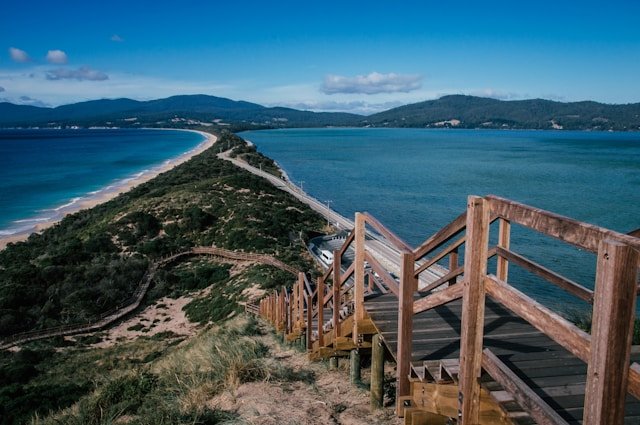
Make Bruny Island a dedicated day rather than trying to combine it with Port Arthur or another major regional destination.
Port Arthur and the Tasman Peninsula
Port Arthur provides one of Tasmania’s most significant historic experiences, while the surrounding Tasman Peninsula adds dramatic coastal scenery and geological formations.
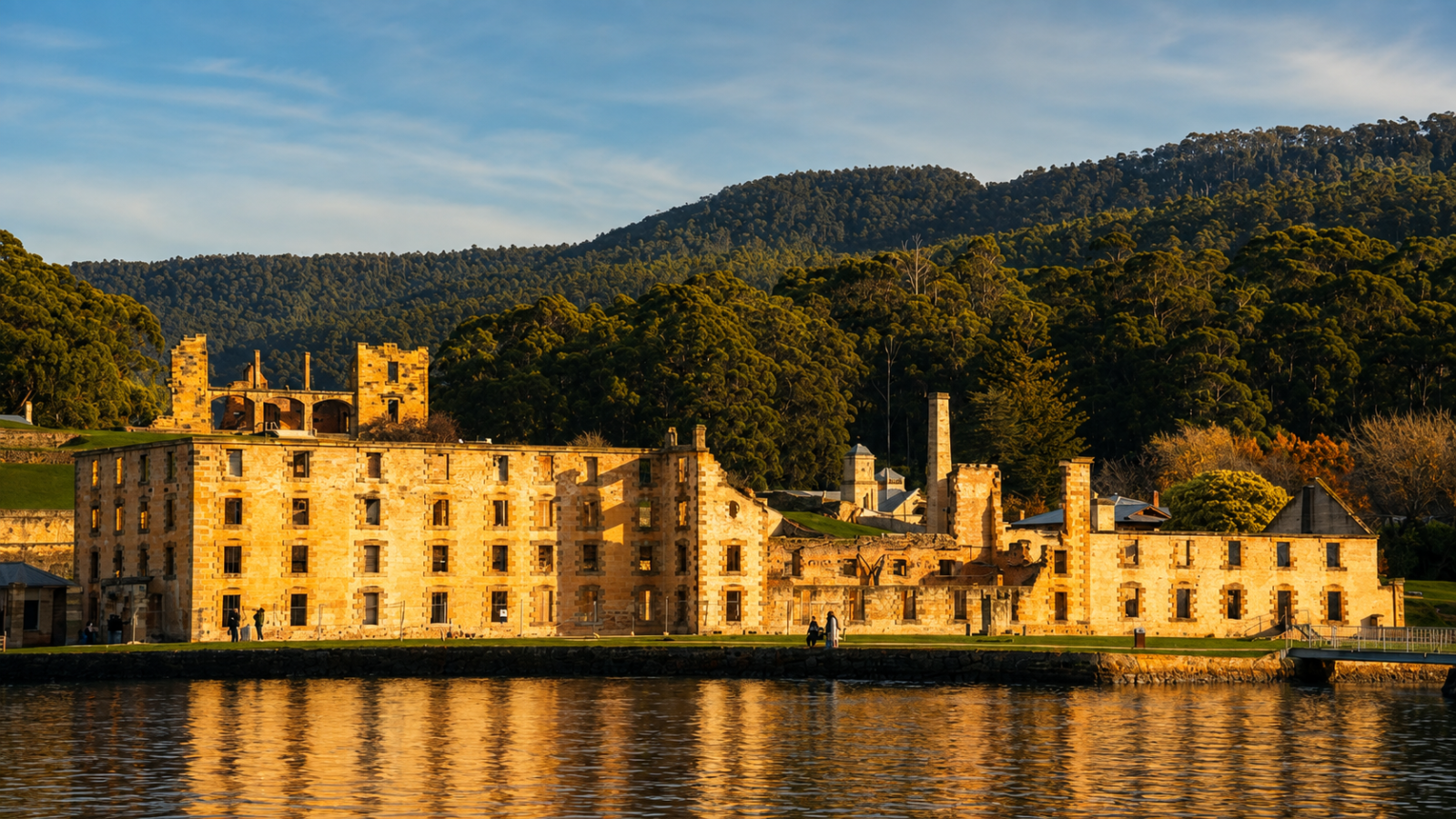
The combination can fill an entire day. Visitors wanting to explore the peninsula more deeply should consider staying overnight rather than rushing back to Hobart.
Richmond and the Coal River Valley
Richmond is one of the easiest excursions from Hobart and can be combined naturally with the Coal River Valley.
The combination works particularly well for visitors interested in historic architecture, rural scenery, food and wine.
Huon Valley
The Huon Valley provides a different side of southern Tasmania, with orchards, agricultural landscapes, river scenery and small towns.
A Huon Valley day works best when you allow time for spontaneous stops rather than treating the route as a race to its farthest point.
Mount Field National Park
Mount Field National Park provides one of the most accessible rainforest and waterfall experiences within reach of Hobart.
Russell Falls is the best-known short walk, but visitors with additional time can explore more of the park’s forest environment.
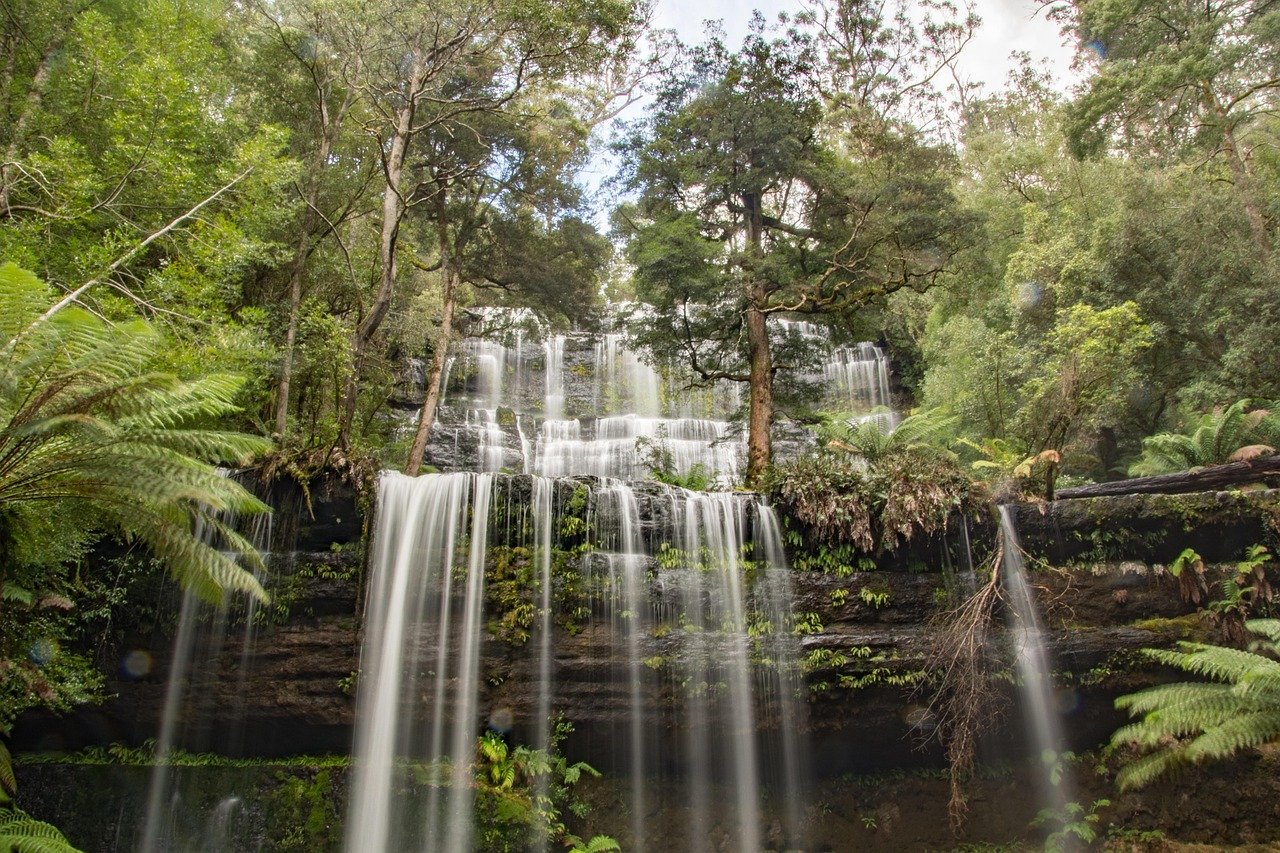
All of these destinations are covered in greater regional context in our South Tasmania Travel Guide.
Suggested Hobart Tasmania Itineraries
How long you should spend in Hobart depends on whether you are exploring only the city or using it as a base for southern Tasmania.
For a first visit, two days can cover the essentials of central Hobart. Three days allows a more balanced city experience. Four or five days creates room for major day trips without sacrificing the city itself.
One Day in Hobart
If you have only one day, concentrate on the city rather than attempting a distant excursion.
- Begin around Salamanca and the waterfront.
- Walk through Battery Point.
- Have lunch around Salamanca, the CBD or waterfront.
- Visit TMAG or another central cultural attraction.
- Use suitable weather for kunanyi / Mount Wellington later in the day if conditions and daylight allow.
- Return to central Hobart for dinner.
Two Days in Hobart
Day 1: Explore Salamanca, the waterfront, Battery Point and central Hobart. If Day 1 is Saturday, make Salamanca Market part of the morning.
Day 2: Visit kunanyi / Mount Wellington when conditions are suitable, then spend the remaining time at the Royal Tasmanian Botanical Gardens, a museum or another city attraction.
Three Days in Hobart
Day 1 — Historic and waterfront Hobart: Salamanca, waterfront, Battery Point and central streets.
Day 2 — Mountain and gardens: Visit kunanyi / Mount Wellington during the best weather window, followed by the Botanical Gardens or another city experience.
Day 3 — Culture: Dedicate substantial time to MONA or choose another cultural focus. If MONA is not your priority, use this day for Richmond and the Coal River Valley.
Four Days in Hobart
Four days provides enough time to experience Hobart properly while adding one major excursion into southern Tasmania.
Day 1 — Salamanca, waterfront and Battery Point: Begin with Hobart’s most walkable visitor precinct. Explore Salamanca Place, continue along the waterfront and Constitution Dock, then walk through Battery Point. If your first day falls on a Saturday, begin at Salamanca Market.
Day 2 — kunanyi / Mount Wellington and Hobart: Use the clearest available weather window for the mountain. After returning to the city, visit the Royal Tasmanian Botanical Gardens, TMAG or explore another inner-Hobart neighbourhood.
Day 3 — MONA and the River Derwent: Allow several hours for MONA and consider travelling by ferry so the journey along the Derwent becomes part of the experience.
Day 4 — Choose a South Tasmania day trip: Richmond and the Coal River Valley work well for history, food and wine. Alternatively, dedicate the day to Bruny Island, Mount Field National Park or Port Arthur and the Tasman Peninsula.
Five Days in Hobart
Five days is an excellent amount of time for a first Hobart Tasmania visit because it allows three city-focused days and two regional excursions without turning the holiday into a sequence of long drives.
Day 1 — Central Hobart: Explore Salamanca, the waterfront, Constitution Dock and Battery Point.
Day 2 — kunanyi / Mount Wellington: Visit the mountain when weather permits, then spend the afternoon around the Botanical Gardens, Queens Domain or another central attraction.
Day 3 — MONA and Hobart culture: Travel to MONA, ideally allowing time to experience the River Derwent as part of the journey. Spend the evening exploring Hobart’s restaurant scene.
Day 4 — Bruny Island: Drive to Kettering, cross by ferry and dedicate the day to Bruny rather than attempting to combine the island with another major destination.
Day 5 — Choose Port Arthur, Mount Field or Richmond: Select the destination that best matches your interests instead of trying to visit several regions in one day.
Seven Days in Hobart and South Tasmania
A seven-day stay allows Hobart to function as the gateway to a broader South Tasmania experience.
Day 1: Salamanca, Hobart waterfront and Battery Point.
Day 2: kunanyi / Mount Wellington, Royal Tasmanian Botanical Gardens and additional city exploration.
Day 3: MONA and the River Derwent.
Day 4: Richmond and the Coal River Valley.
Day 5: Bruny Island.
Day 6: Port Arthur and selected Tasman Peninsula coastal attractions.
Day 7: Mount Field National Park or the Huon Valley.
Seven days does not mean every night needs to be spent in Hobart. If Port Arthur, Bruny Island or the Far South is a major priority, moving accommodation for one or two nights can reduce unnecessary return driving.
Can You Visit Hobart Without a Car?
Yes. A car is not essential for a city-focused Hobart holiday.
Visitors staying around the CBD, waterfront, Salamanca or Battery Point can reach many of the city’s major attractions on foot. Public buses, taxis, rideshare services and organised tours can extend the area you can explore without driving.
Hobart becomes more difficult without a car when the itinerary expands into rural southern Tasmania. Bruny Island, the Huon Valley, Mount Field and sections of the Tasman Peninsula are generally easier to explore independently with a vehicle, although organised tours can provide alternatives for some destinations.
Best Hobart Experiences Without a Car
- Hobart waterfront
- Salamanca Place
- Salamanca Market
- Battery Point
- Tasmanian Museum and Art Gallery
- Central Hobart
- MONA using suitable public/ferry transport arrangements
- Selected organised day tours
If you intend to spend several days outside the city, another strategy is to stay car-free for the central Hobart portion of the holiday and collect a rental vehicle only when the road-trip portion begins.
Hobart for Couples
Hobart works particularly well for couples because food, scenery, heritage and nature can be combined without requiring long transfers between every experience.
A relaxed couples itinerary might include a morning around Salamanca, lunch near the waterfront, an afternoon exploring Battery Point and dinner in central Hobart. Another day could combine the River Derwent with MONA, while suitable weather can be reserved for kunanyi / Mount Wellington.

For a longer trip, Richmond and the Coal River Valley can provide a food-and-wine-focused excursion, while an overnight stay on Bruny Island or the Tasman Peninsula can create a slower alternative to a conventional day trip.
Visiting Hobart on a Budget
Hobart can be explored at different budget levels because many of its strongest experiences involve public spaces, neighbourhoods and landscapes rather than paid attractions.
Walking the waterfront, Salamanca Place and Battery Point can occupy much of a day without an attraction ticket. Salamanca Market is free to enter, although food and purchases naturally add costs.
Travellers can also reduce transport expenses by staying within walking distance of central Hobart and grouping nearby attractions together.
Ways to Reduce Hobart Travel Costs
- Stay within walking distance of the CBD if the accommodation price difference is reasonable.
- Combine Salamanca, Battery Point and the waterfront into one walking day.
- Use free attractions and public spaces between paid experiences.
- Compare accommodation across several inner-city areas rather than searching only Salamanca.
- Avoid hiring a car for days when you will only explore central Hobart.
- Use supermarkets, bakeries and markets for some meals rather than eating every meal at a restaurant.
- Book essential transport and accommodation early during major events and busy travel periods.
Accessibility in Hobart
Accessibility varies across Hobart because the city combines modern public spaces with historic buildings, steep streets, older footpaths and natural environments.
The waterfront and some central areas can be relatively straightforward to navigate, while Battery Point and other hillside neighbourhoods contain steeper gradients.
Historic buildings may also have physical constraints that newer attractions do not.
If step-free access, accessible parking, toilets, seating or mobility assistance is essential, confirm the current arrangements directly with individual attractions and accommodation providers before travelling.
The same principle applies to kunanyi / Mount Wellington. Being able to reach an elevated area by vehicle does not mean every lookout, walking track or surface will suit every mobility requirement.
Hobart Weather and What to Pack
Hobart’s weather is one of the strongest reasons to pack layers rather than dressing only for the forecast maximum temperature.
Conditions around the waterfront can feel very different from conditions on kunanyi / Mount Wellington, and wind can significantly affect how cold the day feels.
What Should You Pack for Hobart?
- Comfortable walking shoes
- A warm layer
- A weather-resistant outer layer
- Sun protection
- Reusable water bottle
- Day bag
- Warmer clothing for mountain visits
- Offline access to important bookings or maps for regional travel
In winter, visitors planning mountain trips should be prepared for substantially colder conditions than those experienced around the city centre.
Even in summer, carrying an additional layer is sensible when travelling into exposed mountain or coastal environments.
Driving and Parking in Hobart
Driving around Hobart is generally manageable, but a car can become less convenient in the most walkable central areas because parking rules, time limits and availability need to be considered.
If your accommodation includes parking, consider leaving the vehicle there while exploring Salamanca, Battery Point and the waterfront on foot.
Check parking signs carefully. Restrictions, fees and operating times can differ between streets and facilities and may change over time.
Visitors unfamiliar with Hobart should also remember that some inner streets are steep or narrow compared with broad mainland-city roads.
Hobart by Campervan or Motorhome
Hobart is a common starting or finishing point for Tasmania campervan journeys, but travelling by campervan requires different planning from staying in a city hotel.
Do not assume that being able to park a campervan somewhere automatically means overnight camping is permitted.
Overnight rules vary between councils, campgrounds, reserves, national parks and private properties. Check the current conditions for each planned overnight stop.
If Hobart is the beginning of a longer driving holiday, plan your first legal overnight destination before leaving the city rather than searching for somewhere late in the evening.
For road-trip planning, you can browse Camps Australia Wide travel guides. Always cross-check individual camping locations with current official or campground information because access, fees and conditions can change.
Hobart for International Visitors
For international travellers, Hobart can provide a manageable introduction to Tasmania because the central visitor areas are relatively compact while the city offers accommodation, restaurants, transport and access to regional tours.
Before travelling to Australia, check current Australian entry and visa requirements applicable to your nationality and circumstances through official Australian Government sources.
Mobile Data in Hobart and Tasmania
Reliable mobile data can be useful for navigation, weather forecasts, restaurant bookings, ferry information and communication with accommodation providers.
Coverage is generally more straightforward in Hobart than in remote parts of Tasmania, but visitors taking regional trips should not assume continuous reception in every mountain, forest or rural location.
Download important maps and booking information before travelling into less populated areas.
International visitors who prefer to arrange mobile data before arrival can explore Airalo eSIM options. Confirm that your device supports eSIM technology and check the current plan, network, validity period and data allowance before purchasing.
How to Choose the Right Day Trip from Hobart
Bruny Island, Port Arthur, Richmond, the Huon Valley and Mount Field are all frequently described as Hobart day trips, but they offer very different experiences.
Choose according to your interests rather than simply selecting whichever destination appears first on a list of things to do near Hobart.
Choose Bruny Island for Coast, Food and Island Scenery
Bruny Island is a strong choice for travellers wanting coastal scenery, island landscapes, wildlife possibilities, food experiences and short walks.
The ferry crossing means the day requires more logistical planning than a conventional drive from Hobart.
Choose Port Arthur for History
Port Arthur should be the priority if history is your main interest.
Combine the historic site with only a realistic number of Tasman Peninsula coastal stops. Trying to see every geological formation on the same day can reduce the time available at Port Arthur itself.
Choose Richmond for an Easier Short Excursion
Richmond is closer to Hobart than several other major regional destinations and therefore works well when you do not want an extremely long day.
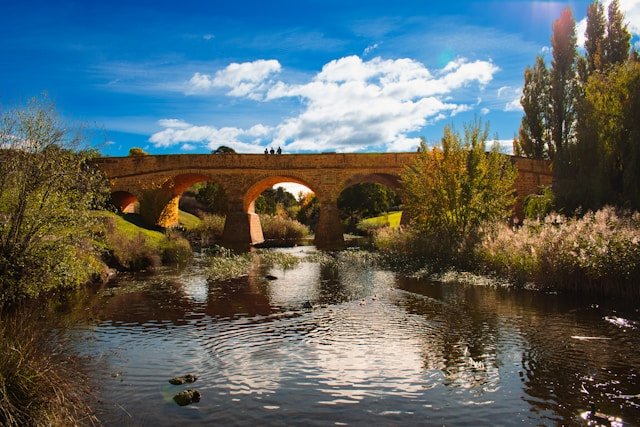
Combining Richmond with the Coal River Valley can turn the trip into a mixture of history, food, wine and countryside.
Choose Mount Field for Rainforest and Waterfalls
Mount Field is particularly rewarding for visitors wanting rainforest, waterfalls and walking.
Russell Falls provides a relatively short introduction, while additional forest walks can transform the visit into a substantial nature day.
Choose the Huon Valley for a Slower Road Trip
The Huon Valley is less about reaching one headline attraction and more about the journey through towns, agricultural landscapes and local food areas.
It suits travellers who prefer stopping spontaneously rather than moving between tightly scheduled attractions.
Where to Go After Hobart
Hobart is often either the beginning or end of a Tasmania road trip. If you have more than a few days on the island, the next destination should be chosen according to the overall route rather than simply driving to the nearest famous attraction.
Hobart to South Tasmania
If Hobart is only the first stage of your southern journey, continue into Bruny Island, the Huon Valley, Tasman Peninsula, Derwent Valley or Far South.
Use our South Tasmania Travel Guide to plan the broader region.
Hobart to East Coast Tasmania
Tasmania’s East Coast is a natural continuation for travellers heading north-east from Hobart.
The route can eventually connect Hobart with Orford, Swansea, Freycinet and destinations farther north.
Plan the route with our East Coast Tasmania Travel Guide.
Hobart to Freycinet National Park
Freycinet National Park is better treated as part of an East Coast journey than as a rushed Hobart return trip.
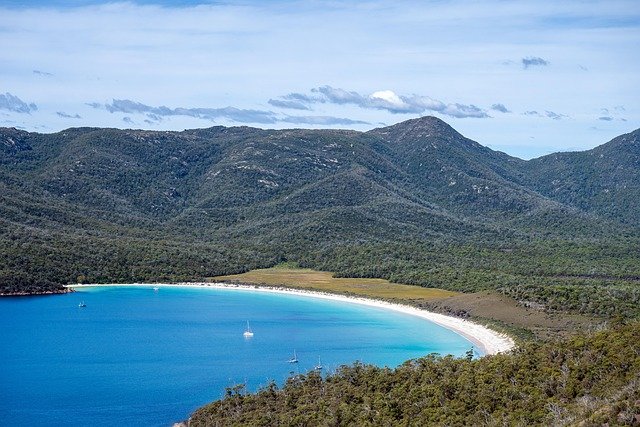
Staying around the Freycinet area gives visitors substantially more time for walking and coastal exploration.
See our Freycinet National Park Travel Guide before planning this section.
Hobart to the Central Highlands
Travelling through the Derwent Valley provides one route from Hobart towards Tasmania’s central interior.
The landscape becomes increasingly rural and elevated as travellers move away from Hobart.
Continue with our Central Highlands Tasmania Travel Guide.
Hobart to Launceston
Hobart and Launceston are connected by the Midland Highway, making the two cities straightforward anchors for a Tasmania itinerary.
Rather than viewing Launceston only as an overnight stop, use our Launceston Tasmania Travel Guide to explore the city and surrounding attractions.
Hobart to North Tasmania
Travellers continuing beyond Launceston can explore the Tamar Valley and other northern destinations.
See our North Tasmania Travel Guide for regional planning.
Hobart to the West Coast
Tasmania’s West Coast provides a major contrast with Hobart, with mountain roads, rainforest, mining heritage and remote western landscapes.
Allow appropriate driving time and check weather and road conditions before travelling into western Tasmania.
Continue with our West Coast Tasmania Travel Guide.
Hobart to North West Tasmania
North West Tasmania should generally be treated as a substantial stage of a Tasmania road trip rather than a quick excursion from Hobart.
Use our North West Tasmania Travel Guide when planning the north-western part of your journey.
Practical Hobart Tasmania Travel Tips
1. Keep Your Mountain Day Flexible
If you are staying in Hobart for several days, avoid locking kunanyi / Mount Wellington into the itinerary when another day has significantly better conditions.
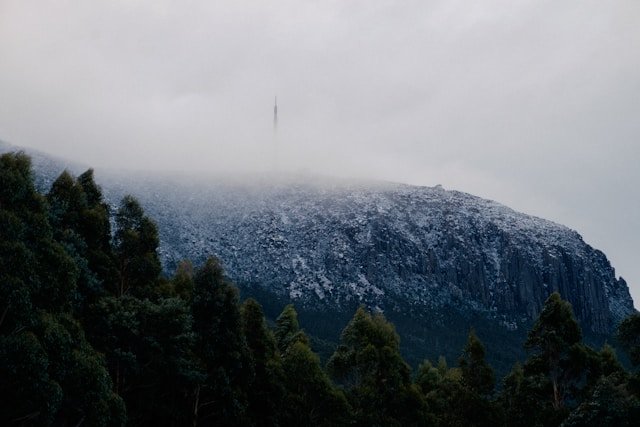
Use suitable weather when it appears and rearrange city activities around it where practical.
2. Put Salamanca Market on the Correct Day
Salamanca Market is a Saturday attraction. If it is important to your visit, organise your Hobart dates accordingly and confirm current operating information before travelling.
3. Do Not Hire a Car Just to Explore Salamanca
Central Hobart is one of the easiest parts of a southern Tasmania holiday to explore without a vehicle.
If your itinerary includes several car-free city days, compare the cost and convenience of collecting your rental vehicle later.
4. Allow Time for Hobart Itself
Do not use Hobart exclusively as a hotel base for Bruny Island, Port Arthur and other day trips.
The city deserves at least one substantial day of its own, and two or three city-focused days will suit many first-time visitors better.
5. Book Popular Experiences Early
Accommodation, restaurants, ferries, tours and major attractions can become busy during popular travel periods and events.
If an experience is essential to the trip, avoid assuming there will always be same-day availability.
6. Carry Layers
Hobart weather can change during the day, while mountain conditions can differ dramatically from those around the waterfront.
A light weather-resistant outer layer and something warm are useful even when the morning forecast appears comfortable.
7. Avoid Overloading Day Trips
Bruny Island, Port Arthur and Mount Field each deserve meaningful time.
Attempting to combine unrelated destinations simply because they appear geographically close on a Tasmania map usually produces more driving and less experience.
8. Check Opening Days
Museums, galleries, restaurants and smaller businesses do not necessarily operate identical hours every day of the year.
Confirm anything essential shortly before visiting, particularly during public holidays and quieter seasons.
9. Leave Space in the Itinerary
Some of Hobart’s best moments do not require a booking: walking beside the harbour, discovering a street in Battery Point, staying longer over lunch or watching weather move across the mountain.
An itinerary with every hour allocated can make these experiences harder to enjoy.
10. Use Hobart as Part of a Logical Tasmania Route
If you are travelling around the whole island, avoid repeatedly returning to Hobart after beginning the road trip.
Plan a progressive route through Tasmania’s regions instead. Our Tasmania trip planning guide explains how to structure a larger itinerary.
Frequently Asked Questions About Hobart Tasmania
Is Hobart Tasmania worth visiting?
Yes. Hobart combines historic neighbourhoods, waterfront scenery, food, museums and immediate access to kunanyi / Mount Wellington. It also provides a practical base for exploring major South Tasmania destinations including Bruny Island, Richmond, Port Arthur and Mount Field.
What is Hobart best known for?
Hobart is particularly known for Salamanca Place and Salamanca Market, its River Derwent waterfront, Battery Point, kunanyi / Mount Wellington, MONA, Tasmanian food and its combination of historic architecture and natural scenery.
What are the best things to do in Hobart?
For a first visit, some of the best things to do in Hobart include exploring Salamanca Place, visiting Salamanca Market on Saturday, walking around the waterfront and Battery Point, visiting kunanyi / Mount Wellington, experiencing MONA, exploring the Royal Tasmanian Botanical Gardens and visiting TMAG.
How many days do you need in Hobart?
Two to three days provides a good introduction to Hobart itself. Four or five days is better if you want to include one or two major day trips. Around seven days allows Hobart to become a base for a broader South Tasmania itinerary.
Is two days enough for Hobart?
Two days is enough to see several major Hobart attractions, particularly Salamanca, the waterfront, Battery Point and kunanyi / Mount Wellington. However, adding MONA or regional day trips makes three or more days more comfortable.
Is three days enough for Hobart?
Three days is a strong amount of time for a first city-focused visit. It allows one day around Salamanca and historic Hobart, another around the mountain and gardens, and a third for MONA or a nearby excursion.
Do you need a car in Hobart?
No, not for a central Hobart visit. Salamanca, the waterfront, Battery Point and several city attractions can be explored on foot. A car becomes much more useful for independent trips beyond Hobart into southern Tasmania.
Is Hobart walkable?
Central Hobart is relatively walkable, particularly around the CBD, waterfront, Salamanca and Battery Point. Some areas are hilly, so visitors with mobility limitations should check gradients and routes in advance.
When is Salamanca Market?
Salamanca Market is held on Saturdays. Current operating times should be checked with the official market before visiting, particularly around exceptional events or circumstances.
Is Salamanca Place worth visiting when the market is closed?
Yes. Salamanca Place is worth exploring throughout the week because of its sandstone warehouses, restaurants, cafés, galleries, shops and location between the waterfront and Battery Point.
Is Battery Point worth visiting?
Yes. Battery Point is one of Hobart’s most distinctive historic neighbourhoods and can be combined easily with Salamanca on foot. Much of the experience comes from its streets, cottages and architectural character rather than one major attraction.
Can you drive up kunanyi / Mount Wellington?
Pinnacle Road normally provides vehicle access towards the summit, but access can be temporarily restricted by snow, ice, severe weather or other hazards. Check current road status before travelling.
Does it snow in Hobart?
Snow is much more common on elevated kunanyi / Mount Wellington than in central Hobart. The mountain can experience snow and ice during colder conditions, while snow in the central city is uncommon.
Is MONA worth visiting?
MONA is one of Hobart’s major cultural attractions and can be particularly worthwhile for visitors interested in art, architecture and unconventional museum experiences. Personal responses to the art naturally vary, so allow enough time to experience the museum rather than treating it as a quick stop.
How long should you spend at MONA?
Allow several hours at minimum if MONA is an important part of your trip. Many visitors can comfortably spend a substantial portion of the day there, especially when the ferry journey is included.
What is the best time of year to visit Hobart?
Hobart can be visited year-round. Summer provides long daylight hours, autumn can be excellent for walking and food-focused travel, winter offers a colder atmosphere and possible mountain snow, while spring provides increasing daylight with variable weather.
Is Hobart good in winter?
Yes. Hobart remains an active city in winter, with restaurants, museums, markets and cultural attractions available alongside colder outdoor experiences. Shorter daylight and possible mountain road restrictions should be included in itinerary planning.
Where is the best area to stay in Hobart?
For many first-time visitors, the CBD, waterfront, Salamanca and Battery Point provide the most convenient locations. North Hobart can appeal to travellers interested in dining, while South Hobart provides easier access towards Wellington Park.
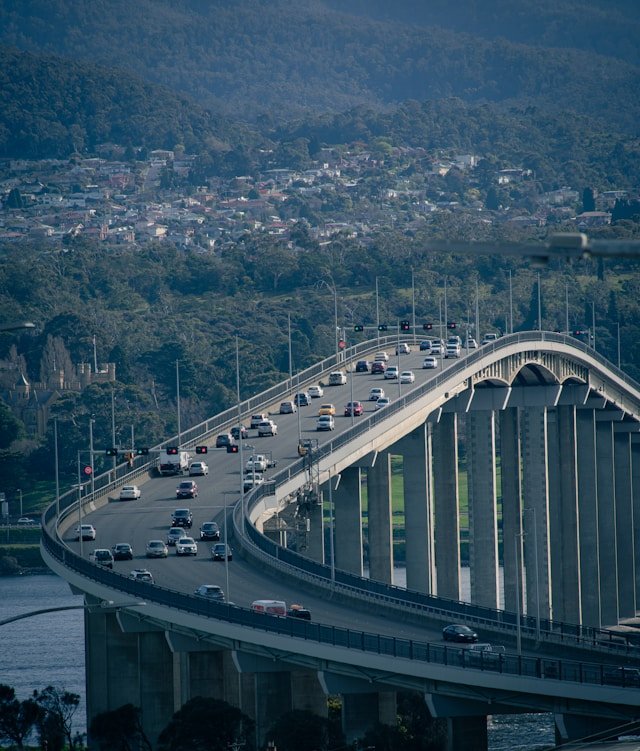
Can you visit Bruny Island from Hobart?
Yes. Bruny Island is commonly visited from Hobart as a full-day excursion. The journey involves driving to Kettering and taking the vehicle ferry to Bruny Island. Allow enough time for the ferry crossing and travel between island attractions.
Can you visit Port Arthur from Hobart?
Yes. Port Arthur is a popular day trip from Hobart. The journey can also be combined with selected Tasman Peninsula coastal attractions, although trying to include too many stops can make the day rushed.
Can you visit Mount Field from Hobart?
Yes. Mount Field National Park can be visited from Hobart as a day trip. Russell Falls is the best-known short walk, while additional forest walks make it possible to spend considerably longer in the park.
What is the easiest day trip from Hobart?
Richmond and the Coal River Valley can provide one of the easier regional excursions because they are relatively close to Hobart and can be adapted into either a shorter outing or a fuller day.
Is Hobart suitable for families?
Yes. Hobart offers waterfront walks, gardens, museums, markets, ferries, parks and relatively short travel distances between many central attractions. Families should take additional care around working waterfront areas and exposed mountain environments.
Is Hobart expensive to visit?
The cost varies substantially with accommodation, dining and activities. Visitors can control costs by using Hobart’s walkable centre, mixing paid attractions with free experiences and comparing accommodation outside the most popular waterfront locations.
Can Hobart be explored on foot?
Many central Hobart attractions can be combined on foot. A particularly useful route connects the waterfront, Salamanca Place and Battery Point. A vehicle or other transport becomes more useful for outer attractions and regional destinations.
Is Hobart a good base for exploring Tasmania?
Hobart is an excellent base for South Tasmania but should not be used as a base for the entire island. Tasmania’s East Coast, West Coast, north and north-west are better explored progressively as part of a road trip rather than through repeated return journeys to Hobart.
Where should I go after Hobart?
Popular onward routes include South Tasmania, the East Coast and Freycinet, the Central Highlands or Launceston and northern Tasmania. The best choice depends on the total length and direction of your Tasmania itinerary.
Plan Your Hobart Tasmania Trip
A successful Hobart Tasmania itinerary does not need to include every attraction.
Start with the experiences that make Hobart distinctive: the waterfront, Salamanca, Battery Point and kunanyi / Mount Wellington. Add MONA if art and culture are important to you, then use additional days for gardens, museums, food and neighbourhood exploration.
Only after allocating enough time to Hobart itself should you begin adding regional day trips.
With one day, concentrate on central Hobart. With two or three days, combine the historic city, mountain and cultural attractions. With four or five days, add selected South Tasmania excursions. With a week, consider spending at least one night outside Hobart rather than returning to the city after every journey.
Weather should also influence the order of your itinerary. City museums, food experiences and historic streets provide flexibility when mountain conditions are poor, while clear weather should be used strategically for kunanyi / Mount Wellington and exposed outdoor experiences.
If Hobart is the beginning of a larger Tasmania road trip, use our Travel Tasmania: Complete Guide to Every Region to compare the island’s major regions.
For help building the complete route, read How Do I Plan a Trip to Tasmania? Complete Tasmania Trip Planning Guide.
Book and Organise Your Hobart Trip
Once your Hobart itinerary is reasonably settled, organise the major bookings in an order that supports the trip rather than restricting it unnecessarily.
Start with travel dates and flights. Next decide how many nights you genuinely need in Hobart and whether any nights will be spent elsewhere in South Tasmania. Then determine whether you need a rental car for the entire stay or only for the regional portion.
Compare Flights to Hobart
If your travel dates are flexible, comparing several arrival and departure combinations can help you understand your options. You can compare flights for your Hobart and Tasmania trip. Confirm the final fare, baggage allowance and airline conditions before booking.
Find Accommodation in Hobart
Choose the area before choosing the property. Staying close to Salamanca or the CBD may reduce transport needs, while accommodation farther from the centre may suit travellers prioritising parking or a quieter environment.
You can compare Hobart accommodation options. Check the exact map location, parking, cancellation conditions and guest requirements before confirming your stay.
Compare Rental Cars
A vehicle is particularly useful if Hobart forms part of a South Tasmania or whole-island road trip. You can compare Tasmania rental car options. Review insurance, excess, fuel conditions, kilometre allowances and road restrictions before booking.
Camping and Road-Trip Planning
If you are leaving Hobart in a campervan or motorhome, browse Camps Australia Wide travel guides as one road-trip planning resource. Confirm individual campsites and overnight rules using current local or official information.
Mobile Data for International Travellers
International visitors can explore Airalo eSIM options for Australia. Check device compatibility, network details, data allowance and validity before purchasing.
Final Thoughts: Is Hobart Worth Visiting?
Hobart is worth more than a quick stop between the airport and Tasmania’s wilderness.
Its appeal comes from contrast.
Historic sandstone buildings sit beside a working waterfront. Battery Point rises above busy Salamanca. The River Derwent creates a broad maritime landscape through the city, while kunanyi / Mount Wellington rises more than a kilometre above sea level behind it.
Within the same trip, you can explore a Saturday market, walk through historic streets, experience major art, eat Tasmanian produce, travel by ferry and stand in an exposed mountain environment overlooking the city.
Hobart’s other advantage is what lies beyond it.
Richmond and the Coal River Valley provide history and food. Bruny Island adds coast and island scenery. The Tasman Peninsula combines dramatic geology with Port Arthur. The Huon Valley leads into rural southern Tasmania, while the Derwent Valley provides a route towards Mount Field and the Central Highlands.
That combination makes Hobart Tasmania both an important destination and one of the best starting points for understanding the southern half of the island.
Give the city enough time, keep the mountain day flexible, avoid overloading your day trips and allow Hobart to be part of the holiday rather than simply the place where the holiday begins.
Continue exploring with our South Tasmania Travel Guide, or return to the complete Travel Tasmania guide to plan your journey across the rest of the island.
Visitor planning note: Opening hours, road access, attraction tickets, tours, transport schedules and weather conditions can change. Check important details with the relevant official authority, attraction or operator shortly before travelling.
Affiliate disclosure: Some travel-planning links in this guide are affiliate links. If you make an eligible booking or purchase through one of these links, Island Files Tasmania may receive a commission at no additional cost to you. Affiliate relationships do not change our aim of providing useful and neutral travel information.