
Bruny Island Tasmania is where rugged coastlines, quiet beaches, wildlife, local produce and some of southern Tasmania’s most dramatic landscapes come together on one island.
Located south of Hobart and reached by ferry from Kettering, Bruny Island feels remarkably removed from the city despite being accessible as a day trip. The island stretches from sheltered northern landscapes to the wilder coastline of South Bruny National Park, with the narrow isthmus known as The Neck connecting its northern and southern sections.
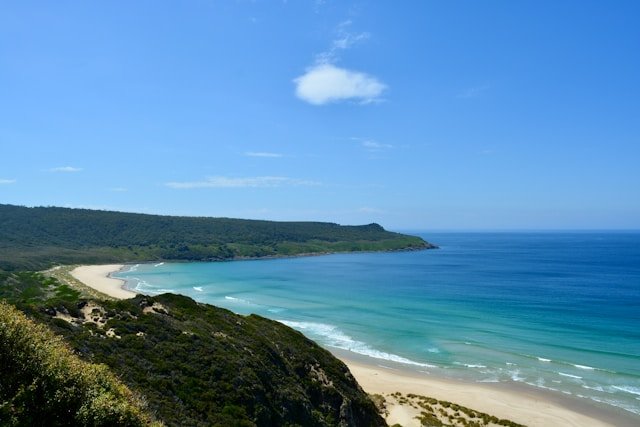
For first-time visitors, the appeal is easy to understand. You can climb to one of Tasmania’s most recognisable island viewpoints, walk beside the coast at Adventure Bay, search for native wildlife, sample local produce, explore South Bruny National Park and continue to Cape Bruny Lighthouse overlooking the Southern Ocean.
But Bruny Island is larger—and slower to explore—than many first-time visitors expect.
Ferry queues, winding roads, unsealed sections, wildlife, walking tracks and the distance between attractions mean that trying to see the entire island in a few hours can turn a beautiful trip into a rushed driving itinerary.
This complete Bruny Island Tasmania travel guide explains how to plan the trip properly, including the Bruny Island ferry, The Neck, Adventure Bay, Cape Bruny Lighthouse, South Bruny National Park, beaches, walks, wildlife, local food, accommodation, camping, road conditions and suggested itineraries.
If Bruny Island forms part of a larger southern journey, also explore our South Tasmania Travel Guide. Travellers beginning in the capital can use our Hobart Tasmania Travel Guide, while our complete Travel Tasmania guide connects Bruny Island with the rest of the state.
Bruny Island Tasmania Quick Guide
- Location: South Tasmania, south of Hobart
- Access: Vehicle and passenger ferry from Kettering to Roberts Point
- Ferry crossing: Approximately 20 minutes
- Best known for: The Neck, coastal scenery, wildlife, local produce, Adventure Bay, South Bruny National Park and Cape Bruny Lighthouse
- Main settlements and areas: Dennes Point, Adventure Bay, Alonnah and Lunawanna
- Major protected area: South Bruny National Park
- Best for: Nature, photography, wildlife, food, beaches, walking and road trips
- Can you visit in one day? Yes, but choose your stops carefully
- Better trip length: One or two nights if you want a slower island experience
- Roads: A mixture of sealed and unsealed roads
- National park pass: Required when entering South Bruny National Park
- Exploring North Bruny
- Cloudy Bay
- Jetty Beach
- Weather & What to Pack
- Photography Tips
- Accessibility
- Responsible Travel
- Day Trip vs Overnight
- Bruny Island on a Budget
- Bruny Island for Couples
- Solo Travel
- Visiting Without a Car
- How Long Do You Need?
- Where to Go After Bruny
- Book & Organise Your Trip
Jump to Bruny Island
- About Bruny Island Tasmania
- Why Visit Bruny Island?
- Getting to Bruny Island
- Bruny Island Ferry
- Getting Around Bruny Island
- North Bruny vs South Bruny
- Best Things to Do on Bruny Island
- The Neck
- Adventure Bay
- South Bruny National Park
- Cape Bruny Lighthouse
- Best Bruny Island Walks
- Beaches
- Wildlife
- Food & Local Produce
- Towns & Settlements
- Where to Stay
- Camping
- Best Time to Visit
- Bruny Island Day Trip
- Bruny Island Itineraries
- Bruny Island with Families
- Practical Travel Tips
- Frequently Asked Questions
- Plan Your Bruny Island Trip
About Bruny Island Tasmania
Bruny Island lies off the south-east coast of Tasmania, separated from the Tasmanian mainland by the D’Entrecasteaux Channel.
The island has a distinctive shape. Broad northern and southern landmasses are joined by a long, narrow sandy isthmus called The Neck. This geography creates two noticeably different sides of the Bruny experience.
North Bruny contains rural landscapes, coastline and smaller communities, while South Bruny becomes progressively more rugged and includes much of South Bruny National Park.
Between them are sheltered bays, exposed ocean beaches, forest, farmland, cliffs and small settlements.
Bruny Island therefore should not be imagined as one small attraction just offshore from Hobart. Driving from the ferry terminal to the southern end of the island takes substantial time, especially when sightseeing stops are added.
That scale is one reason an overnight stay can dramatically change the experience.
What Is Bruny Island Known For?
Bruny Island is best known for its combination of coastal scenery, wildlife, food and accessible wilderness.
Popular Bruny Island attractions and experiences include:
- The Neck and Truganini Lookout
- Adventure Bay
- South Bruny National Park
- Cape Bruny Lighthouse
- Fluted Cape
- Grass Point
- Cloudy Bay
- Jetty Beach
- White wallaby sightings
- Birdlife and coastal wildlife
- Local cheese, seafood and other produce
- Island road trips
- Camping and overnight stays
- Beaches and coastal walks
Why Visit Bruny Island Tasmania?
Bruny Island offers an unusually varied Tasmania experience within a relatively compact destination.
1. The Coastal Scenery Changes Constantly
The island contains sheltered bays, long beaches, narrow coastal passages, cliffs and exposed Southern Ocean landscapes.
Travelling from Roberts Point towards Cape Bruny therefore feels less like driving through one continuous landscape and more like moving between several different versions of coastal Tasmania.
2. Wildlife Is Part of the Island Experience
Bruny Island supports wallabies, pademelons, echidnas, wombats, possums and extensive birdlife. South Bruny National Park also protects important coastal habitats.
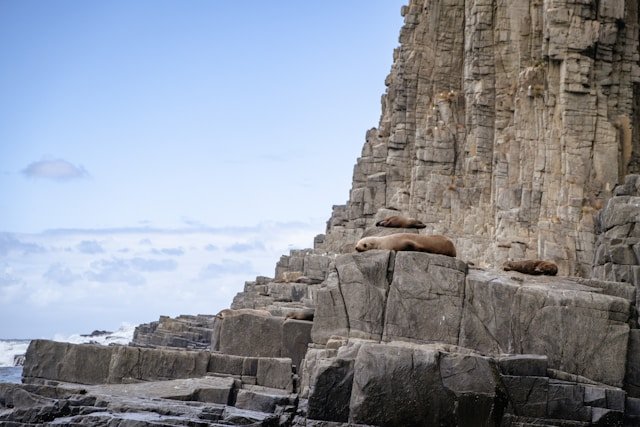
Wildlife should be observed rather than chased, handled or fed. Dawn and dusk can provide increased animal activity but also create a greater collision risk for motorists.
3. Food Can Be Part of the Road Trip
Bruny Island has developed a strong reputation for local produce and small-scale food experiences.
Rather than treating lunch as something separate from sightseeing, visitors can build selected food stops naturally into the route.
4. There Are Walks for Different Experience Levels
Bruny Island includes everything from relatively accessible coastal walks to steep Grade 4 routes requiring greater experience and care.
This makes it possible to build an itinerary around your actual fitness and interests instead of assuming that the island’s best scenery requires a full-day hike.
5. Bruny Island Feels Different After the Day-Trippers Leave
A day trip provides an excellent introduction, but staying overnight removes the need to structure every experience around the return ferry.
It also gives you more opportunity to experience quieter mornings and evenings and to divide the island into logical sections.
Getting to Bruny Island from Hobart
Most visitors reach Bruny Island by travelling from Hobart to Kettering and taking the ferry across the D’Entrecasteaux Channel to Roberts Point on North Bruny.
Kettering is south of Hobart, and the road journey typically takes around 35–40 minutes under normal conditions, although traffic and your exact starting point can change this considerably.
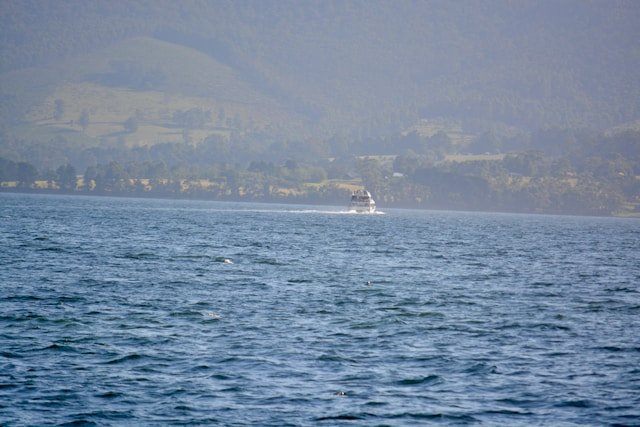
The ferry crossing itself is short, but that does not mean you should calculate your journey based only on sailing time. Queueing and peak travel demand need to be included in the schedule.
If you are beginning your trip in Tasmania’s capital, see our complete Hobart Tasmania Travel Guide before deciding how many days to allocate between the city and Bruny Island.
Bruny Island Ferry: What You Need to Know
The Bruny Island ferry connects Kettering on mainland Tasmania with Roberts Point on Bruny Island.
SeaLink currently operates the ferry service every day of the year, with a crossing time of approximately 20 minutes.
The most important thing for first-time visitors to understand is that the service operates on a queueing system.
Can You Book a Specific Bruny Island Ferry?
No. Pre-purchasing a ticket does not reserve a specific ferry departure.
According to the current SeaLink system, pre-purchased tickets are used for the next available ferry after you join and progress through the queue.
This distinction matters when planning a tightly timed day trip.
Should You Pre-Purchase a Ferry Ticket?
You can pre-purchase your ticket or purchase it at the terminal, but pre-purchasing does not remove the need to queue.
Check the current fare structure and timetable before travelling because services and fare periods can change.
How Long Is the Bruny Island Ferry?
The crossing between Kettering and Roberts Point currently takes approximately 20 minutes.
However, your total crossing process will be longer once arrival, queueing, loading and unloading are considered.
How Early Should You Arrive?
There is no single arrival time that works for every day because demand varies.
Allow additional time during weekends, school holidays, public holidays and other busy travel periods. If your itinerary depends on reaching a timed attraction, build a generous buffer into the day.
Can Pedestrians Use the Bruny Island Ferry?
The service carries passengers as well as vehicles. However, reaching attractions after arriving at Roberts Point is the more important planning issue for travellers without a vehicle.
Bruny Island’s attractions are spread over a considerable distance, so arriving as a pedestrian does not automatically provide convenient access to The Neck, Adventure Bay or Cape Bruny.
Getting Around Bruny Island
A vehicle provides the greatest flexibility for most independent Bruny Island trips.
The island contains a mixture of sealed and unsealed roads. Tasmania Parks and Wildlife Service notes that long sections of road on Bruny Island are unsealed but suitable for 2WD vehicles and bicycles.
That does not mean every road should be driven at normal highway speed. Loose surfaces, corners, wildlife, changing weather and other traffic require appropriate caution.
Do You Need a 4WD on Bruny Island?
A 4WD is not required for the standard visitor route to many of Bruny Island’s major attractions under normal conditions.
However, always check current road conditions and any restrictions applying to your rental vehicle. Rental agreements may contain specific conditions for unsealed roads even where those roads are routinely used by 2WD vehicles.
Hiring a Car for Bruny Island
If Bruny Island is part of a larger Tasmania road trip, taking the same vehicle across on the ferry is usually the simplest independent option.
You can compare Tasmania rental car options. Before booking, confirm insurance, excess, kilometre limits and whether the rental agreement permits travel on the roads you plan to use.
Driving at Dawn and Dusk
Drive particularly carefully around dawn, dusk and after dark because native animals can be active on or beside the road.
Tasmania Parks and Wildlife Service specifically advises visitors to avoid driving in reserves at night where possible and to watch carefully for wildlife.
North Bruny vs South Bruny: Understanding the Island
Understanding the difference between North Bruny and South Bruny makes itinerary planning much easier.
The two major parts of the island are joined by The Neck, the narrow isthmus that has become one of Bruny Island’s most recognisable landscapes.
North Bruny
The northern section contains rural scenery, coastal areas, Dennes Point and several food-related stops. Travellers heading directly south can easily pass through too quickly, but North Bruny can reward visitors who have more than one day.
South Bruny
South Bruny contains many of the island’s headline natural attractions, including Adventure Bay, South Bruny National Park, Cloudy Bay and Cape Bruny.
The landscape becomes increasingly rugged towards the southern coastline.
If you only have one day, many itineraries naturally concentrate on The Neck and South Bruny. With two or more days, it becomes much easier to include North Bruny without sacrificing the southern attractions.
Best Things to Do on Bruny Island Tasmania
The best things to do on Bruny Island range from easy viewpoints and food stops to demanding coastal walks.
First-time visitors should resist the temptation to include every attraction in a single day. Choose experiences that work geographically together and leave enough time to enjoy them.
1. Visit The Neck and Truganini Lookout
The Neck is one of the defining landscapes of Bruny Island Tasmania.
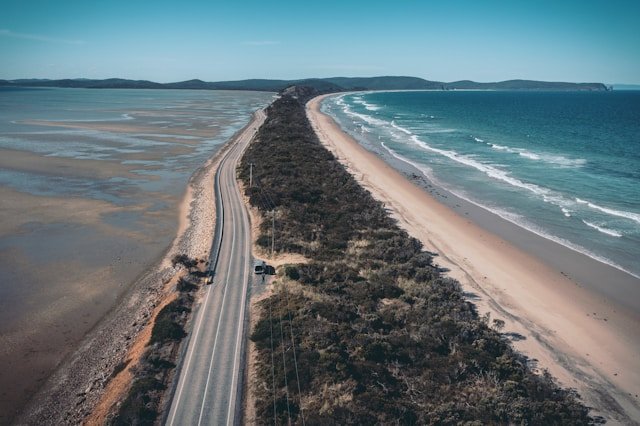
This narrow sandy isthmus joins North Bruny and South Bruny, with water visible on either side from the elevated lookout.
For many visitors, the view from Truganini Lookout becomes one of the most memorable images of the trip.
Climbing to the Lookout
Reaching the elevated viewpoint requires climbing a substantial staircase from the parking area.
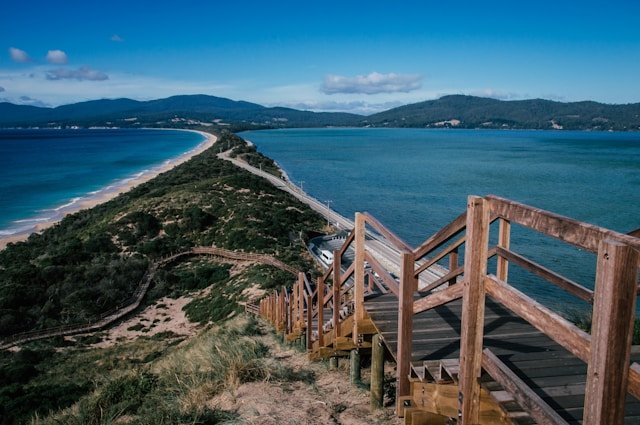
Take your time, particularly in warm weather or strong wind, and do not block the stairs while taking photographs.
Why The Neck Is Important
The lookout does more than provide a photograph. It reveals the unusual geography of Bruny Island more clearly than almost anywhere else.
From above, visitors can see how narrow the land connection is between the island’s two major sections.
Wildlife Around The Neck
The Neck is also associated with important seabird habitat.
If visiting wildlife areas around dusk, follow current access instructions, remain on designated routes and avoid using behaviour that disturbs birds or other animals.
Wildlife viewing should never take priority over protecting nesting or breeding animals.
2. Explore Adventure Bay
Adventure Bay is one of the most important visitor areas on South Bruny and an excellent base for combining beach scenery, wildlife and walking.
The long sheltered bay contrasts with the much more exposed coastline found elsewhere on South Bruny.
Visitors can spend time on the beach, begin the Grass Point and Fluted Cape walks, look for wildlife or simply use the area as a slower stop between The Neck and the southern national park.
Adventure Bay Beach
Adventure Bay provides a broad stretch of sand in a relatively sheltered setting.
Tasmania Parks and Wildlife Service identifies Adventure Bay as one of the island’s more sheltered swimming locations, but visitors should still assess conditions personally. Beaches are unpatrolled, and ocean conditions can change.
Wildlife Around Adventure Bay
Adventure Bay is one of the areas where visitors may encounter wallabies and other native animals.
Bruny’s unusual white wallabies are particularly well known, but sightings are never guaranteed.
Do not feed wildlife to encourage photographs. Keep a respectful distance and allow animals to move away freely.
3. Discover South Bruny National Park
South Bruny National Park protects some of Bruny Island’s wildest coastal landscapes.
The park includes towering cliffs, beaches, forest, headlands and important wildlife habitat, with walking opportunities ranging from relatively accessible coastal tracks to long and demanding circuits.
A valid Tasmania parks pass is required for entry to the national park.
What Can You Do in South Bruny National Park?
- Visit Cape Bruny and the lighthouse precinct
- Walk to Grass Point
- Complete the more challenging Fluted Cape circuit
- Explore Cloudy Bay
- Visit Jetty Beach
- Undertake longer walks such as the Labillardiere Peninsula Circuit
- Look for birdlife and native wildlife
- Camp at designated national park campgrounds where permitted
- Experience remote coastal scenery
Do You Need a Tasmania Parks Pass?
Yes. A valid parks pass is required when entering Tasmania’s national parks, including South Bruny National Park.
Check the current Parks and Wildlife Service pass options before travelling because fees and pass products can change.
4. Visit Cape Bruny Lighthouse
Cape Bruny Lighthouse stands above the rugged southern coastline and is one of Bruny Island’s most significant historic landmarks.
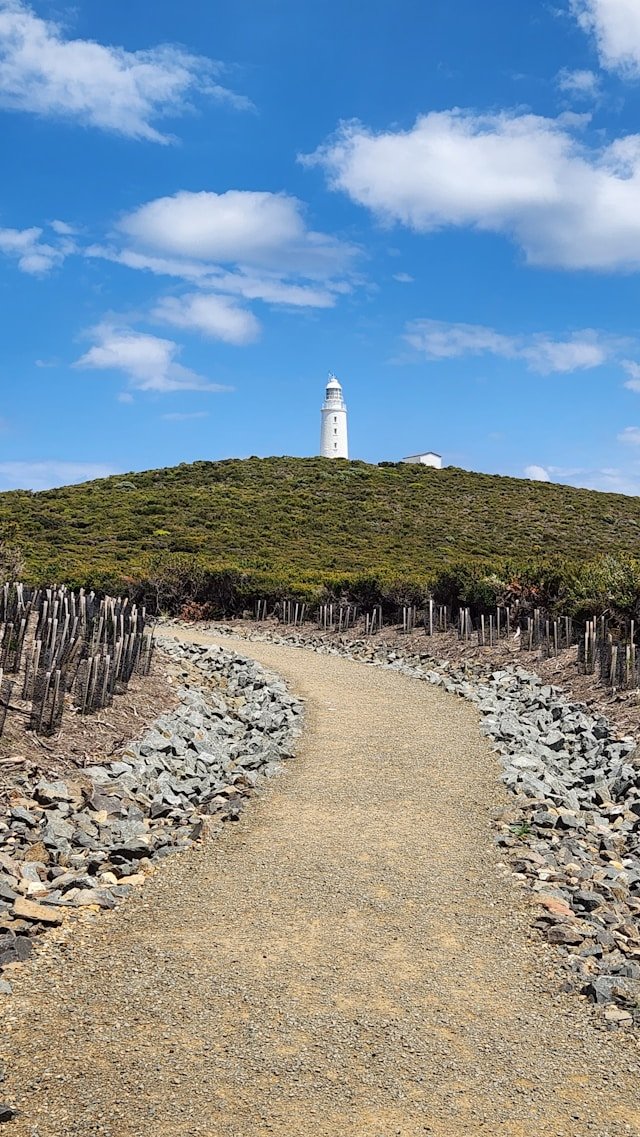
The lighthouse was constructed during the 1830s and first lit in 1838. Tasmania Parks and Wildlife Service identifies it as Australia’s second-oldest lighthouse.
The setting is as important as the structure itself.
From Cape Bruny, the landscape opens towards the Southern Ocean, with cliffs, headlands and expansive ocean views creating one of the island’s most exposed coastal environments.
Can You Go Inside Cape Bruny Lighthouse?
Access to the lighthouse interior is through a guided tour rather than general self-guided entry.
If climbing the lighthouse is important to you, check current tour times and booking arrangements before making the long drive south.
Cape Bruny Lighthouse Walk
Visitors should be prepared for a steep path between the car park and the lighthouse.
The grounds also contain unprotected cliff edges. Children should be closely supervised, and all visitors should stay well back from exposed edges, particularly during strong winds.
How Far Is Cape Bruny Lighthouse from the Ferry?
Tasmania Parks and Wildlife Service estimates approximately 1 hour 15 minutes by road from Roberts Point ferry terminal to Cape Bruny Lighthouse.
That estimate illustrates why Cape Bruny should not be treated as a quick stop immediately after arriving on the island.
Once The Neck, Adventure Bay, food stops and other attractions are included, the journey can occupy a substantial part of the day.
Best Walks on Bruny Island
Walking is one of the best ways to experience Bruny Island beyond roadside viewpoints.
However, the island’s walks vary significantly in difficulty. A short coastal walk and a Grade 4 cliff-top circuit should not be treated as interchangeable experiences.
Grass Point Walk
The Grass Point walk begins from Adventure Bay and provides one of the more accessible introductions to walking in South Bruny National Park.
Tasmania Parks and Wildlife Service currently classifies the walk as Grade 2, approximately 4 kilometres return and around 1.5 hours.
The route follows the coastline towards Grass Point, where remains associated with the area’s historic whaling activity can be seen.
For visitors who want coastal scenery without undertaking the much steeper Fluted Cape circuit, Grass Point is an excellent alternative.
Fluted Cape Walk
Fluted Cape is significantly more demanding.
The current Parks and Wildlife Service information classifies the route as Grade 4, approximately 4 kilometres and around 2.5 hours return.
The track includes very steep terrain and unprotected cliff edges. Bushwalking experience is recommended.
This is not simply an extension that every visitor walking to Grass Point should automatically attempt.
Assess your experience, weather, footwear, available daylight and comfort with exposed terrain before continuing.
Labillardiere Peninsula Circuit
The Labillardiere Peninsula Circuit provides a much longer walking experience in a more remote part of South Bruny National Park.
Parks and Wildlife Service currently lists the circuit at approximately 18 kilometres, taking around 5.5 to 6.5 hours, and classifies it as Grade 4.
This is a substantial day walk rather than something to add casually to a general sightseeing itinerary.
East Cloudy Head
East Cloudy Head offers another longer coastal walking option. Parks and Wildlife Service currently lists the walk at approximately 12 kilometres return, around four hours and Grade 4.
Visitors should check current track conditions and weather before committing to longer walks on exposed parts of the island.
Best Beaches on Bruny Island
Bruny Island’s beaches range from relatively sheltered bays to exposed Southern Ocean coastline.
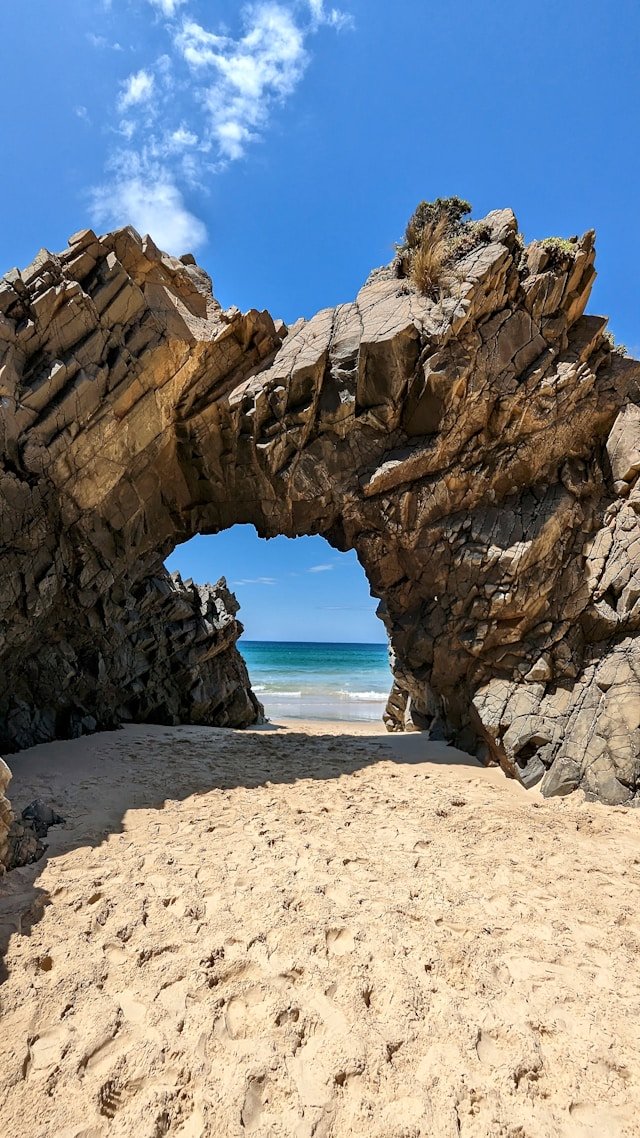
That difference matters. A beach that looks beautiful in photographs is not automatically suitable for swimming.
Adventure Bay
Adventure Bay is one of Bruny Island’s best-known beaches and provides a sheltered contrast to the wilder coast farther south.
It can be combined easily with the Grass Point walk and other Adventure Bay experiences.
Cloudy Bay
Cloudy Bay presents a much wilder side of South Bruny.
The long exposed beach faces Southern Ocean conditions and is known among experienced surfers. Parks and Wildlife Service warns that Bruny beaches are unpatrolled and that surfers should be aware of strong rips.
Visitors who are not experienced in these conditions can still enjoy Cloudy Bay for scenery and walking without entering the water.
Jetty Beach
Jetty Beach lies within South Bruny National Park and offers a more sheltered coastal setting.
It can be particularly appealing for travellers spending more than one day on the island because it allows the southern section to be explored at a slower pace.
Wildlife on Bruny Island Tasmania
Wildlife is one of the reasons many travellers choose Bruny Island, but responsible viewing is essential.
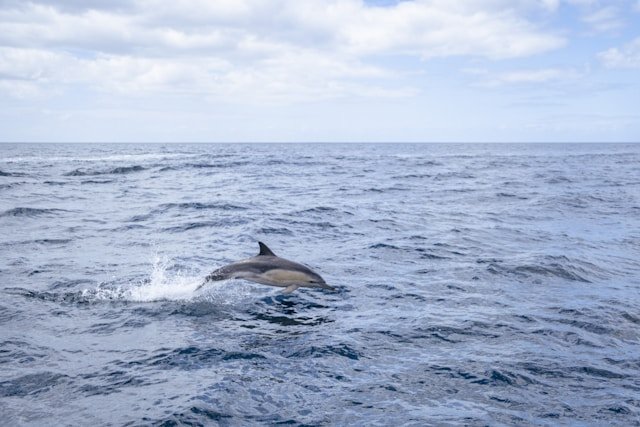
Animals recorded around the island include wallabies, pademelons, echidnas, wombats, brush-tailed possums and numerous bird species. Marine wildlife can also be encountered around the coastline.
White Wallabies
Bruny Island is particularly famous for unusually pale or white Bennett’s wallabies associated with a genetic colour variation.
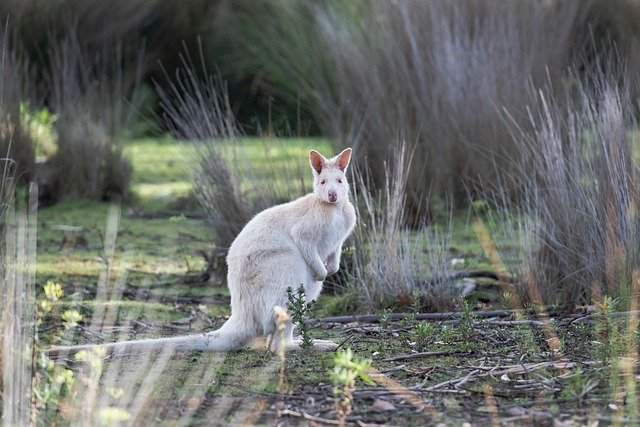
Adventure Bay and surrounding South Bruny areas are often associated with sightings, but these are wild animals rather than an attraction operating to a schedule.
Never surround, chase or feed a wallaby for a photograph.
Birdlife
Bruny Island supports exceptionally diverse birdlife. Tasmania Parks and Wildlife Service notes that around 120 bird species have been recorded on the island.
Visitors may encounter seabirds, raptors and woodland species, while coastal areas also contain short-tailed shearwater and penguin rookeries.
Whales
Whales may sometimes be seen around Bruny Island during migration periods.
Grass Point and Adventure Bay can provide opportunities to scan the water, but sightings should always be treated as a possibility rather than a guaranteed experience.
Responsible Wildlife Viewing
- Do not feed wildlife.
- Keep a respectful distance.
- Do not chase animals for photographs.
- Keep to designated tracks in sensitive habitats.
- Drive slowly around dawn and dusk.
- Follow seasonal wildlife-access restrictions.
- Keep noise and artificial light to a minimum around nesting areas.
- Never assume an animal will move away from your vehicle.
Bruny Island Food and Local Produce
Food is an important part of the Bruny Island experience, and many visitors deliberately combine scenic stops with local produce.
Depending on current businesses and seasonal availability, the island is associated with cheese, seafood, oysters, bread, berries, honey, beverages and other Tasmanian products.
Rather than trying to stop at every producer, choose a few that fit naturally along your route.
Build Food Stops into Your Route
A common mistake on a Bruny Island day trip is treating every food producer as an essential attraction.
Several 20- or 30-minute stops can quickly remove hours from the sightseeing day once parking, ordering and eating are included.
If Cape Bruny or a substantial walk is your priority, keep food stops selective. If food is the main reason for visiting, build a slower itinerary around producers instead.
Bruny Island Towns and Settlements
Bruny Island does not have one large town functioning as a central tourism hub. Instead, small communities are distributed around different parts of the island.
Adventure Bay
Adventure Bay is one of the most useful areas for visitors because of its beach, walking tracks and access to South Bruny National Park.
Alonnah
Alonnah sits on the western side of South Bruny and provides a convenient location between The Neck and the island’s more southerly attractions.
It can work particularly well as an accommodation base for travellers staying overnight.
Lunawanna
Lunawanna lies farther south-west and is passed when travelling towards Cape Bruny.
Staying around this part of the island can reduce the distance to the southern national park and lighthouse compared with accommodation farther north.
Dennes Point
Dennes Point occupies the northern end of Bruny Island and offers a quieter alternative to the more frequently visited southern route.
It is better suited to a multi-day itinerary than an already crowded first-time day trip.
Where to Stay on Bruny Island
Staying overnight is one of the easiest ways to improve a Bruny Island trip.
Instead of watching the clock for the return ferry, you can divide the island into sections, undertake a longer walk and experience quieter periods of the day.
Adventure Bay: Best for First-Time Visitors and Walking
Adventure Bay is an excellent choice if beaches, wildlife and the Grass Point or Fluted Cape tracks are priorities.
Alonnah: Best for a Central South Bruny Base
Alonnah’s position makes it practical for exploring several different parts of South Bruny without staying at the far end of the island.
Lunawanna: Best for Southern Exploration
Lunawanna can suit travellers prioritising Cape Bruny, national park scenery and the island’s quieter southern side.
North Bruny: Best for a Quieter Alternative
North Bruny can appeal to repeat visitors or travellers who want to experience a less rushed side of the island rather than concentrating exclusively on the major South Bruny attractions.
Once you have chosen the right part of the island, you can compare accommodation for Bruny Island and the Hobart region. Always check the property’s exact location on the island before booking because driving distances can be considerably greater than expected.
Camping on Bruny Island
Camping can be one of the best ways to experience Bruny Island slowly, particularly for travellers already exploring Tasmania by campervan, motorhome or camping vehicle.
Designated camping opportunities exist within South Bruny National Park and elsewhere on the island, but camping rules, facilities, fees and booking requirements vary.
Never assume that a beach access road, reserve or parking area permits overnight camping simply because there is enough physical space to park.
Camping in South Bruny National Park
Tasmania Parks and Wildlife Service provides camping within South Bruny National Park, including designated coastal campground areas.
Check current campground information before arrival, including access, fees, facilities, fire restrictions and any booking or registration requirements.
Planning a Bruny Island Campervan Trip
Campervan travellers should plan overnight stops before boarding the ferry, particularly during busy travel periods.
You can browse Camps Australia Wide travel guides as one planning resource for your Tasmania road trip. Cross-check every intended overnight location against current official or campground information before relying on it.
Best Time to Visit Bruny Island Tasmania
Bruny Island can be visited throughout the year, but daylight, weather, visitor numbers and wildlife activity change between seasons.
Summer: December to February
Summer’s longer daylight hours make it easier to combine sightseeing, food stops, beaches and walking.
It is also a popular travel period, so ferry queues, accommodation demand and visitor numbers can be higher.
Autumn: March to May
Autumn can provide an excellent balance for road trips and walking, with visitor patterns generally changing after the busiest summer period.
Daylight decreases as the season progresses, so longer hikes require more careful timing.
Winter: June to August
Winter brings shorter days and colder conditions, but Bruny Island remains accessible.
A winter visit can suit travellers interested in quieter landscapes, food and shorter walks, provided weather and daylight are incorporated realistically into the itinerary.
Spring: September to November
Spring brings increasing daylight and active natural environments, but Tasmanian weather can remain highly changeable.
Carry appropriate layers and avoid planning the day around the assumption that morning conditions will remain unchanged.
Bruny Island Day Trip from Hobart
A Bruny Island day trip from Hobart is entirely possible, but success depends on limiting the number of stops.
The goal should not be to visit every attraction listed in this guide.
Remember that the day includes the drive from Hobart to Kettering, ferry queueing, the ferry crossing, driving across Bruny Island and repeating the process on the return journey.
A Realistic Bruny Island Day Trip
- Leave Hobart early and travel to Kettering.
- Join the ferry queue with a reasonable time buffer.
- Cross to Roberts Point.
- Choose one or two food stops rather than every producer.
- Visit The Neck and Truganini Lookout.
- Continue to Adventure Bay.
- Choose either a short walk, beach time or another nearby experience.
- Continue farther south only if your available time comfortably permits it.
- Allow generous time to return to Roberts Point and join the ferry queue.
- Return to Kettering and Hobart.
Can You Include Cape Bruny Lighthouse in a Day Trip?
Yes, but reaching Cape Bruny adds substantial driving.
If the lighthouse is a priority, reduce the number of food and sightseeing stops elsewhere rather than simply adding it to an already full itinerary.
Travellers wanting The Neck, Adventure Bay, a substantial walk, several food stops and Cape Bruny in the same day may find the experience unnecessarily rushed.
Suggested Bruny Island Itineraries
The ideal Bruny Island itinerary depends on whether you have several hours, one full day or an overnight stay.
One Day on Bruny Island
For a first visit, prioritise quality over quantity.
Morning: Travel from Hobart to Kettering, cross to Roberts Point and make your way south. Add one selected local food stop if desired.
Late morning: Visit The Neck and climb to Truganini Lookout.
Midday: Continue to Adventure Bay for lunch, beach scenery or wildlife viewing.
Afternoon: Walk to Grass Point or choose another South Bruny experience. Experienced walkers specifically prioritising Fluted Cape should allow the required time and avoid overloading the rest of the day.
Late afternoon: Begin travelling north with enough time to join the return ferry queue without creating unnecessary pressure.
One Day with Cape Bruny Lighthouse
If Cape Bruny Lighthouse is your main priority, structure the day around the southern drive.
- Take an early ferry from Kettering.
- Drive south with only one short food stop.
- Visit The Neck.
- Continue towards Cape Bruny.
- Explore the lighthouse precinct and take a tour if arranged.
- Stop around Adventure Bay on the return journey.
- Choose a short additional experience rather than a long walk.
- Return towards Roberts Point with a ferry buffer.
Two Days on Bruny Island
Two days provides a much better balance between driving and experiencing the island.
Day 1 — North Bruny, The Neck and Adventure Bay: Cross from Kettering, explore selected food stops and northern scenery, visit The Neck and spend the afternoon around Adventure Bay. Stay overnight on South Bruny.
Day 2 — South Bruny National Park: Visit Cape Bruny Lighthouse or complete a selected walk. Add Cloudy Bay, Jetty Beach or another southern stop depending on weather and available time, then return north for the ferry.
Three Days on Bruny Island
Three days allows Bruny Island to become a destination rather than simply a Hobart excursion.
Day 1 — North Bruny: Explore Dennes Point, northern landscapes and selected local producers before travelling towards your accommodation.
Day 2 — Adventure Bay and walking: Spend the day around Adventure Bay. Choose Grass Point for an easier walk or Fluted Cape for a more demanding experience if conditions and experience are suitable.
Day 3 — Cape Bruny and the southern coast: Visit the lighthouse precinct, explore South Bruny National Park and include Cloudy Bay or Jetty Beach before returning to the ferry.
Bruny Island with Families
Bruny Island can be an excellent family destination when the itinerary matches children’s ages and abilities.
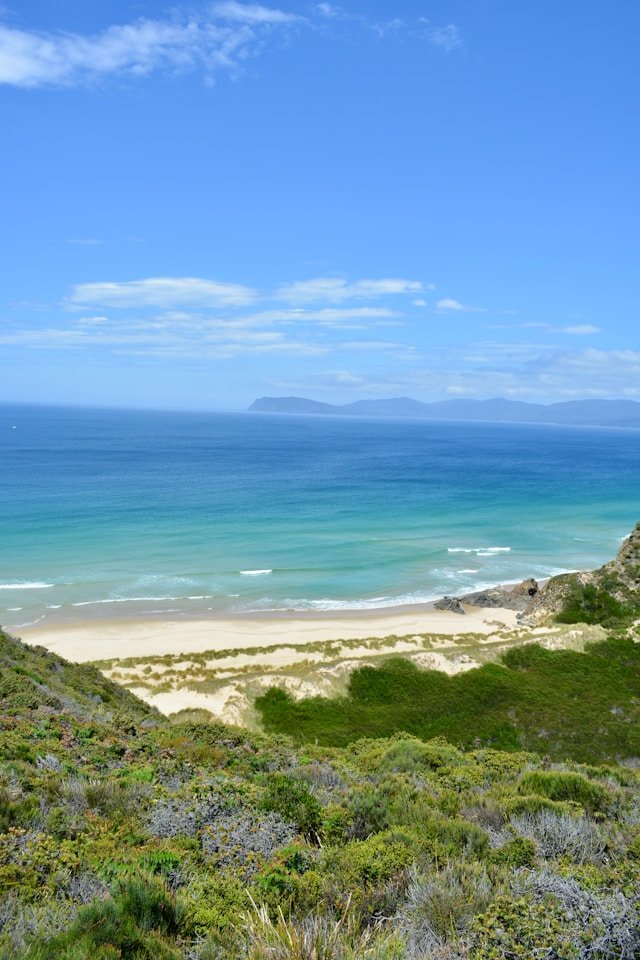
Beaches, wildlife, ferry travel, short walks and food stops can create variety without requiring children to spend the entire day at formal attractions.
Good Family Experiences
- The ferry crossing
- The Neck, where stair-climbing ability permits
- Adventure Bay
- Grass Point for families comfortable with a 4 km walk
- Selected food stops
- Wildlife viewing from a respectful distance
- Jetty Beach and other suitable coastal stops
Walking with Children
Grass Point is classified as Grade 2 and is suitable for most ages, although Tasmania Parks and Wildlife Service advises supervising children around boulder-strewn sections.
Fluted Cape is a different proposition. It is Grade 4, steep and contains hazardous unprotected cliff edges.
Do not assume that because both walks begin in the same area they have comparable difficulty.
Cape Bruny with Children
The lighthouse grounds contain unprotected cliff edges, and the path towards the lighthouse is steep.
Young children require close supervision throughout the precinct.
Essential Bruny Island Travel Tips
1. Do Not Plan the Ferry Like a Reserved Flight
The ferry operates using a queueing system rather than guaranteed individual departure reservations.
Build flexibility into both your outward and return journey.
2. Start Early for a Day Trip
An early start gives you more flexibility for ferry queues, food stops and sightseeing and reduces the temptation to rush during the afternoon.
3. Do Not Underestimate Driving Distances
Bruny Island looks compact on a map, but attractions are distributed along a long north-south route.
Cape Bruny is roughly 1 hour 15 minutes from the ferry terminal before sightseeing stops are added.
4. Check Your Fuel
Do not approach island driving as if fuel and other services will be available at every settlement.
Starting with adequate fuel is a simple way to avoid unnecessary disruption.
5. Download Important Information
Mobile coverage can be less consistent in rural and remote areas than in Hobart.
Save essential booking information, ferry details and maps before relying on them in less connected parts of the island.
6. Bring Layers
Coastal wind can make conditions feel significantly colder than the temperature suggests.
Carry a weather-resistant outer layer when visiting exposed areas, particularly Cape Bruny and Cloudy Bay.
7. Choose Walks by Grade, Not Photographs
A dramatic photograph does not indicate whether a track suits your experience.
Check distance, grade, terrain, weather and daylight before beginning longer Bruny Island walks.
8. Do Not Feed Wildlife
Wildlife encounters are better when animals remain wild.
Observe from a distance and never use food to bring animals closer for photographs.
9. Consider Staying Overnight
If Bruny Island is one of the main reasons for your Tasmania holiday, staying overnight is usually more rewarding than trying to compress everything into a single return journey from Hobart.
10. Keep the Island Clean
Take rubbish with you where disposal facilities are unavailable, remain on appropriate tracks and avoid damaging vegetation or coastal habitats.
Planning Bruny Island as Part of a Hobart Holiday
Bruny Island and Hobart work particularly well together because they offer very different experiences without requiring travellers to cross Tasmania.
Hobart provides museums, restaurants, Salamanca, Battery Point, the waterfront and kunanyi / Mount Wellington. Bruny Island adds ferry travel, beaches, wildlife, local produce and South Bruny’s rugged coastal environment.
A balanced first-time itinerary might include three days around Hobart followed by one or two days on Bruny Island.
Read our Hobart Tasmania Travel Guide to build the city portion of the trip.
Planning Flights, Accommodation and Transport
If Bruny Island forms part of a wider Tasmania holiday, organise your main transport and accommodation before filling every day with activities.
You can compare flights for your Tasmania trip, then decide how many nights to allocate to Hobart and Bruny Island.
For accommodation, compare available stays for Bruny Island and southern Tasmania. Always inspect the property’s map location before booking; accommodation described as being on Bruny Island can still be a significant drive from your highest-priority attractions.
If you need a vehicle for the wider trip, compare Tasmania rental car options and confirm any restrictions relating to ferry transport and unsealed roads before finalising the booking.
Bruny Island for International Visitors
International visitors can usually incorporate Bruny Island most efficiently into the South Tasmania portion of a larger Australian itinerary.
Mobile data is useful for navigation, weather checks and accommodation communication, but do not assume continuous reception across every part of the island.
If you prefer to organise mobile data before arriving in Australia, you can explore Airalo eSIM options. Check device compatibility, network details, validity and data allowances before purchasing.
Exploring North Bruny Island
North Bruny receives less attention than South Bruny, but that can be part of its appeal. Many first-time visitors leave the ferry terminal and immediately drive south towards The Neck, Adventure Bay and Cape Bruny, which means the northern section can feel quieter and less hurried.
If you have only one day, concentrating on the better-known southern attractions is understandable. If you have two or three days, however, North Bruny deserves time of its own.
The landscapes are generally more rural and open, with farmland, coastal views, smaller communities and local producers helping define the experience.
Dennes Point
Dennes Point sits near the northern end of Bruny Island and offers a quieter alternative to the island’s busier visitor corridor.
It can be particularly rewarding for travellers who enjoy coastal scenery, slow drives and small communities rather than a schedule built entirely around headline attractions.
North Bruny also works well at the beginning or end of a multi-day itinerary because it allows you to explore closer to the ferry without immediately committing to the long drive south.
Should You Stay on North Bruny?
North Bruny can suit travellers looking for a quieter base, but it is less convenient if most of your priorities are Cape Bruny, Cloudy Bay, Adventure Bay and South Bruny National Park.
Before booking accommodation, map the places you genuinely want to visit and estimate the driving required. A beautiful property is less useful if it creates several hours of unnecessary travel each day.
Cloudy Bay
Cloudy Bay is one of the strongest examples of Bruny Island’s exposed southern coastline.
The beach feels very different from the sheltered waters around Adventure Bay. Long stretches of sand, ocean swell and open Southern Ocean weather give Cloudy Bay a much wilder character.
For many visitors, the scenery is the main reason to come rather than swimming.
Beaches on Bruny Island are generally unpatrolled, and exposed coastal conditions can include strong surf and rips. Visitors should assess conditions carefully and avoid entering the water simply because the beach looks calm from a distance.
Walking at Cloudy Bay
Cloudy Bay can be enjoyed through shorter beach walks or used as the starting area for more substantial walking such as East Cloudy Head.
Longer walks should be approached with proper preparation, particularly because the southern coastline can be exposed to rapidly changing wind and weather.
Cloudy Bay for Photography
The broad beach and changing weather can create dramatic photographs, especially when clouds, surf and light interact across the bay.
Photography should never encourage visitors to stand too close to surf, unstable dunes or exposed coastal edges. The safest viewpoint is more important than the most dramatic composition.
Jetty Beach
Jetty Beach offers a quieter and more sheltered coastal experience within South Bruny National Park.
It can be particularly appealing to travellers staying overnight on the island because it allows the southern national park to be explored without rushing directly between Cape Bruny and the ferry.
Camping and other facilities may be available in the broader Jetty Beach area, but current conditions, fees and access requirements should always be checked before arrival.
Bruny Island Weather and What to Pack
Bruny Island’s weather can vary considerably between sheltered bays and exposed southern headlands.

The temperature alone does not tell the whole story. Wind can make Cape Bruny, Cloudy Bay and other exposed locations feel significantly colder than conditions around Kettering or Hobart.
What Should You Pack for Bruny Island?
- Comfortable walking shoes
- A weather-resistant outer layer
- A warm layer
- Sun protection
- Reusable water bottle
- Food and snacks if travelling to quieter parts of the island
- Offline maps or downloaded route information
- Any essential medications
- Camera or binoculars if wildlife and birdlife are priorities
Travellers undertaking longer walks should also carry enough food, water and additional clothing for the conditions rather than relying solely on what is needed for a roadside sightseeing day.
Bruny Island Photography Tips
Bruny Island is highly photogenic, but the best photographs usually come from allowing enough time rather than stopping for two minutes at every viewpoint.
The Neck
The elevated view from Truganini Lookout is one of the island’s classic compositions. Weather, haze and light can change the appearance of the isthmus considerably throughout the day.
Cape Bruny
Cape Bruny works well for broad coastal landscapes, lighthouse photographs and dramatic weather.
Remain behind safe boundaries and never move towards an exposed cliff edge simply to remove foreground objects from a photograph.
Adventure Bay
Adventure Bay offers a softer coastal landscape than Cloudy Bay and can be particularly attractive when the water is calm.
Wildlife Photography
Use distance rather than food to obtain wildlife photographs. A longer lens is much more appropriate than approaching, surrounding or feeding animals.
If the animal changes direction, stops feeding or appears focused on your presence, give it more space.
Accessibility on Bruny Island
Accessibility varies substantially across Bruny Island because the destination includes ferry travel, unsealed roads, beaches, stairways, steep walking tracks and historic sites.
Visitors with mobility requirements should evaluate individual attractions rather than assuming the entire island provides one level of accessibility.
The Neck Accessibility
The famous elevated view from Truganini Lookout requires climbing a long staircase, which may not suit visitors with limited mobility.
The surrounding area can still provide coastal scenery without reaching the upper lookout, but the classic elevated view requires the climb.
Cape Bruny Accessibility
The lighthouse precinct involves a steep approach, and the surrounding terrain is exposed.
Visitors for whom step-free access or limited walking distance is essential should confirm current access information with the relevant operator before travelling specifically for a lighthouse tour.
Adventure Bay
Adventure Bay can provide a less demanding coastal experience than the island’s longer walks, although access to beaches and tracks still varies by location and surface conditions.
Accommodation accessibility also differs significantly between properties. Contact the provider directly if accessible bathrooms, step-free entry, parking or other specific requirements are essential.
Responsible Travel on Bruny Island
Bruny Island’s appeal depends heavily on its wildlife, coastlines and relatively undeveloped landscapes. Responsible visitor behaviour therefore matters.
Do Not Feed Wildlife
Feeding wild animals can change their behaviour, affect diet and encourage them towards roads and people.
White wallabies are especially tempting for visitors to approach because of their unusual appearance, but they should be treated exactly like other wild animals.
Slow Down on the Roads
Wildlife road mortality is a significant issue across Tasmania. Bruny Island’s rural roads require particular care around dawn, dusk and after dark.
Driving more slowly provides additional reaction time and can reduce risk to both wildlife and passengers.
Stay on Established Tracks
Coastal vegetation and dune systems can be easily damaged by repeated foot traffic outside designated routes.
Follow marked tracks and closures even when an informal shortcut appears convenient.
Respect Private Property
Bruny Island contains farms, homes and private roads alongside visitor attractions.
Do not enter land simply because a view looks attractive from the road. Park only where safe and legal, and use designated visitor access.
Take Rubbish with You
Facilities are not available at every beach, lookout or walking area. Carry rubbish until you reach an appropriate disposal point rather than leaving waste beside bins that are already full.
Bruny Island Day Trip vs Overnight Stay
One of the most important Bruny Island planning decisions is whether to visit for a single day or stay overnight.
Choose a Day Trip If…
- You have limited time in South Tasmania.
- You mainly want to see The Neck and Adventure Bay.
- You are happy to choose only a few food and scenic stops.
- You prefer keeping one accommodation base in Hobart.
- You are comfortable with an early start and a structured return journey.
Stay Overnight If…
- Bruny Island is one of the main priorities of your Tasmania trip.
- You want to visit Cape Bruny without rushing.
- You want to undertake longer walks.
- You enjoy wildlife photography around quieter times of day.
- You want time for North Bruny as well as South Bruny.
- You prefer a slower food-focused itinerary.
- You want to experience the island after most day visitors have left.
For many visitors, one overnight stay is the best compromise. It gives enough time to divide the island into two logical areas without requiring a long multi-day commitment.
Visiting Bruny Island on a Budget
Bruny Island can be enjoyed without turning every stop into a paid experience.
The Neck, beaches, scenic drives and many walking experiences can be combined into a relatively low-cost day once transport and national park requirements are accounted for.
Ways to Reduce Bruny Island Costs
- Choose only one or two food producers rather than stopping everywhere.
- Bring water and some snacks from Hobart or Kettering.
- Use free scenic attractions alongside one or two paid experiences.
- Compare whether a day trip or overnight stay is better value for your itinerary.
- If visiting several Tasmania national parks, compare current multi-day or holiday parks-pass options.
- Check ferry fares before departure.
- Avoid unnecessary backtracking, which increases fuel use.
Bruny Island for Couples
Bruny Island works particularly well for couples who prefer a combination of scenery, food and slower road trips.
A relaxed two-day itinerary can include The Neck, a local food stop, Adventure Bay and sunset or evening time on the first day, followed by Cape Bruny or a substantial walk on the second.
Staying overnight also allows dinner and accommodation to become part of the experience rather than ending the day with another drive back to Hobart.
Bruny Island for Solo Travellers
Solo travellers can explore Bruny Island independently, but longer walks and remote areas require the same preparation as anywhere else in Tasmania.
Tell someone your planned route before undertaking a long walk, carry sufficient water and clothing and avoid relying entirely on mobile reception.
For visitors who do not want to drive, an organised tour from Hobart may provide a simpler way to experience the island while also reducing ferry and transport logistics.
Can You Visit Bruny Island Without a Car?
Yes, but independent travel becomes considerably more complicated.
The ferry carries passengers without vehicles, but the main attractions are spread across the island and ordinary public transport does not provide the same flexibility as a mainland city network.
For many visitors without a vehicle, an organised Bruny Island tour from Hobart is therefore more practical than attempting to connect the attractions independently after walking off the ferry.
If you are comfortable driving, another option is to hire a vehicle for the South Tasmania portion of your trip rather than for the entire Hobart stay.
How Long Do You Need on Bruny Island?
The right amount of time depends on whether you want sightseeing, food, longer walks or a slower island experience.
Half a Day
A half-day trip is possible but not ideal. Ferry logistics and driving consume too much of the available time.
If this is genuinely your only option, concentrate on North Bruny and The Neck rather than attempting Cape Bruny.
One Full Day
One full day provides a strong introduction when the itinerary is selective.
The Neck, Adventure Bay and selected food or walking experiences can fit comfortably. Cape Bruny can also fit if it is prioritised and other stops are reduced.
Two Days
Two days is an excellent amount of time for a first visit.
It allows the northern and central sections to be explored on one day and the southern national park and lighthouse on another.
Three Days
Three days suits travellers who want Bruny Island to become a destination rather than a side trip.
You can include North Bruny, longer walks, food experiences and quieter beach time without feeling that every hour must be productive.
Combining Bruny Island with Hobart and South Tasmania
Bruny Island works best as part of a logical South Tasmania route rather than being added randomly between distant destinations.
Bruny Island + Hobart
This is the easiest combination. Spend several days exploring Hobart before travelling south to Kettering and crossing to Bruny.
Use our Hobart Tasmania Travel Guide to organise the city portion.
Bruny Island + Huon Valley
Bruny and the Huon Valley can form part of the same broader southern journey because both lie south of Hobart, although the ferry and road geography still require sensible sequencing.
Travellers with enough time can explore Bruny before continuing into the Channel and Huon region rather than returning to Hobart after every day.
Bruny Island + Tasman Peninsula
Both are major South Tasmania destinations, but they lie in different directions from Hobart.
Do not attempt Bruny Island and Port Arthur on the same day. Each deserves a dedicated day or overnight stay.
For broader regional sequencing, use our South Tasmania Travel Guide.
Where to Go After Bruny Island
After returning to Kettering, several logical routes open through South Tasmania.
Return to Hobart
Hobart is the simplest next stop for travellers continuing to explore the capital or preparing for another regional journey.
Continue Through South Tasmania
You can continue towards the Huon Valley, Far South, Derwent Valley or another southern destination depending on your itinerary.
Continue to the East Coast
If South Tasmania is complete, one common route is to return through Hobart and continue towards East Coast Tasmania.
Travellers continuing farther north can eventually connect with Freycinet National Park and the Bay of Fires.
Continue Inland
Travellers interested in lakes and alpine country can eventually transition from southern Tasmania towards Central Highlands Tasmania.
For whole-island planning, return to our Travel Tasmania: Complete Guide to Every Region.
Frequently Asked Questions About Bruny Island Tasmania
Is Bruny Island worth visiting?
Yes. Bruny Island combines coastal landscapes, beaches, wildlife, food, national park scenery and walking within a destination close enough to visit from Hobart. It is particularly worthwhile for travellers interested in nature and slower road trips.
What is Bruny Island best known for?
Bruny Island is especially known for The Neck and Truganini Lookout, Adventure Bay, white wallabies, South Bruny National Park, Cape Bruny Lighthouse, local produce, beaches and coastal walking.
How do you get to Bruny Island?
Most visitors drive from Hobart to Kettering and take the ferry across the D’Entrecasteaux Channel to Roberts Point on North Bruny.
How long is the Bruny Island ferry?
The ferry crossing takes approximately 20 minutes, although visitors should also allow time for queueing, boarding and unloading.
Can you reserve a specific Bruny Island ferry departure?
The current ferry service operates using a queueing system. Purchasing a ticket in advance does not reserve one specific ferry departure, so travellers should allow flexibility around busy periods.
Can you take a car to Bruny Island?
Yes. The ferry carries vehicles between Kettering and Roberts Point, and having a vehicle is one of the easiest ways to explore the island independently.
Do you need a 4WD on Bruny Island?
Most major visitor routes can generally be explored with a conventional 2WD vehicle under suitable road conditions. Some roads are unsealed, so check current conditions and your rental agreement before travelling.
Can you visit Bruny Island in one day?
Yes. One full day provides a good introduction if you choose a limited number of attractions. The Neck, Adventure Bay and selected food or walking stops can fit comfortably. Adding Cape Bruny requires more driving and a tighter itinerary.
Is it better to stay overnight on Bruny Island?
An overnight stay is better for travellers who want longer walks, Cape Bruny, North Bruny, wildlife photography or a slower food-focused trip. It also removes the pressure of returning to the ferry after a full sightseeing day.
How many days do you need on Bruny Island?
One day is enough for the main highlights, two days provides a much more relaxed first visit, and three days works well for travellers wanting longer walks and deeper exploration.
What are the best things to do on Bruny Island?
Popular experiences include The Neck and Truganini Lookout, Adventure Bay, Grass Point, South Bruny National Park, Cape Bruny Lighthouse, Cloudy Bay, Jetty Beach, wildlife watching and selected local food producers.
Is The Neck worth visiting?
Yes. The Neck provides one of the clearest views of Bruny Island’s unusual geography and is one of the island’s most recognisable viewpoints. Reaching the elevated lookout requires climbing a substantial staircase.
Can you see white wallabies on Bruny Island?
White Bennett’s wallabies occur on Bruny Island and are particularly associated with South Bruny and the Adventure Bay area. Sightings are never guaranteed because they are wild animals.
Should you feed white wallabies?
No. Wild wallabies should not be fed. Feeding can change natural behaviour and diet and can encourage animals to approach people and roads.
Do you need a parks pass for Bruny Island?
A Tasmania parks pass is required for entry to South Bruny National Park under current national park entry requirements. You do not need a national parks pass simply to travel through non-park areas of Bruny Island.
Is Cape Bruny Lighthouse worth visiting?
Yes, particularly if you enjoy maritime history and exposed coastal scenery. The lighthouse is located far south on the island, so reaching it adds significant driving to a day trip.
Can you go inside Cape Bruny Lighthouse?
Interior access is generally provided through guided tours rather than unrestricted self-guided entry. Check current tour schedules and booking arrangements before travelling specifically for this experience.
Is Fluted Cape difficult?
Yes. Fluted Cape is a Grade 4 walk with steep terrain and exposed cliff edges. It should not be treated as an easy extension of the nearby Grass Point walk.
What is an easier walk on Bruny Island?
Grass Point is one of the more accessible South Bruny National Park walks. It is currently classified as Grade 2 and is approximately 4 kilometres return.
Can you swim on Bruny Island?
Swimming is possible at suitable beaches and under appropriate conditions, but Bruny Island beaches are generally unpatrolled. Sheltered locations such as Adventure Bay differ significantly from exposed beaches such as Cloudy Bay, so assess conditions carefully.
Is Bruny Island good for families?
Yes. Ferry travel, beaches, wildlife, The Neck and shorter walks can work well for families. Adults should supervise children closely around cliff edges, beaches and steep tracks.
Can you visit Bruny Island without a car?
Yes, but independent travel is less convenient because attractions are spread widely across the island. Organised tours from Hobart can be a practical alternative for visitors without a vehicle.
Is Bruny Island expensive?
Costs depend on ferry transport, accommodation, food and paid experiences. Travellers can reduce costs by concentrating on beaches, walks and scenic attractions while choosing only a small number of paid food or tour experiences.
Does Bruny Island have mobile reception?
Mobile coverage can vary across Bruny Island and may be weaker in some rural, forested or remote areas. Download maps and important booking information before relying on mobile data throughout the island.
Does Bruny Island have fuel?
Services on Bruny Island are more limited than in Hobart. Travellers should begin the island journey with adequate fuel and should not plan around the assumption that fuel will be available whenever needed.
Can you camp on Bruny Island?
Yes, designated camping options are available on Bruny Island, including within South Bruny National Park. Camp only in legal locations and check current fees, facilities, fire restrictions and access rules before arrival.
What is the best time of year to visit Bruny Island?
Bruny Island can be visited year-round. Summer provides longer daylight hours and warmer conditions, autumn can suit walking and road trips, winter offers quieter landscapes and shorter days, and spring brings increasing daylight with variable weather.
Is Bruny Island good in winter?
Yes, especially for travellers interested in quieter scenery, food and shorter walks. Winter visitors should account for colder weather, shorter daylight hours and potentially more challenging coastal conditions.
Can you combine Bruny Island and Port Arthur in one day?
No, this is not a sensible itinerary. Bruny Island and Port Arthur lie in different directions and each can comfortably fill a day. Visit them on separate days or as separate overnight stages of a South Tasmania trip.
Is Bruny Island part of South Tasmania?
Yes. Bruny Island is one of the major destinations within South Tasmania and is commonly combined with Hobart and other southern experiences.
Plan Your Bruny Island Tasmania Trip
The best way to explore Bruny Island Tasmania is to decide what type of trip you actually want before boarding the ferry.
If you want a classic first-time day trip, concentrate on The Neck, Adventure Bay and a small number of additional stops.
If Cape Bruny Lighthouse is your priority, organise the day around the long southern drive and remove unnecessary stops elsewhere.
If walking is the main reason for visiting, select one appropriate route and allow enough daylight and preparation time rather than adding a major hike to a full sightseeing itinerary.
If food is the focus, choose several producers and allow the journey between them to remain relaxed.
And if Bruny Island is one of the main reasons you are visiting Tasmania, stay overnight.
The ferry may take only around 20 minutes, but Bruny itself should not feel like a 20-minute destination.
Its appeal lies in the distances between places—the changing beaches, quiet roads, wildlife encounters, coastal weather, forest, food and the gradual transition from North Bruny towards the exposed southern coastline.
For a broader southern itinerary, continue with our South Tasmania Travel Guide. If you are staying in the capital before or after Bruny, use our Hobart Tasmania Travel Guide.
If Bruny Island is part of a longer statewide journey, return to Travel Tasmania: The Complete Guide to Every Region or read our complete Tasmania trip planning guide before finalising the rest of your route.
Book and Organise Your Bruny Island Trip
Once the route is clear, organise accommodation, transport and the major fixed experiences before filling every hour of the itinerary.
- Flights: compare flights for your Tasmania trip.
- Accommodation: compare Bruny Island and southern Tasmania accommodation.
- Car hire: compare Tasmania rental car options.
- Camping and campervan planning: browse Camps Australia Wide travel guides.
- International mobile data: explore Airalo eSIM options.
Affiliate disclosure: Some links above are affiliate links. Island Files Tasmania may receive a commission from eligible bookings or purchases made through these links at no additional cost to you. Affiliate relationships do not change our aim of providing useful and neutral travel information.
Travel information note: Ferry operations, fares, road conditions, tour availability, national park requirements, accommodation, camping arrangements, walking-track conditions and business opening hours can change. Confirm important details with the relevant official operator or authority shortly before travelling.